Search This Blog

Wednesday, November 25, 2015

Blood Blockade Battlefront

Though I forgot to mention it, one of the shows I've been watching lately is Blood Blockade Battlefront and since I recently finished it, I decided that I should share my thoughts on the show, in some detail. Blood Blockade Battlefront (or Kekkai Sensen in original), is an anime based on a manga by Yasuhiro Nightow, creator of Trigun. I had read positive and negative reviews of the show on-line and thinking that the concept seemed interesting, I decided to check the show out myself. So, what did I think about it? Well, you'll just have to read on in order to find out.


Blood Blockade Battlefront is set in Hellsalem's Lot, which is actually New York City, a few years after dimensional rift opened up and creatures from another dimension decided to set up shop there. To this metropolis comes our main character, Leonardo Watch; a kid blessed (or cursed, depending on how you look at it) with a pair of magical eyes, on a quest to find a cure for his sister's blindness, which he feels responsible for. Due to circumstances, Leonard becomes a member of Libra, a secret society that protects Hellsalem's Lot from various dangers. He also end up befriending White, a girl who claims to be a ghost and her twin-brother Black, who was born with strong psychic powers.
That's the basic gist of things, as far as plot goes. Now, on to the actual, you know, review-portion of this review.
Let's start with the positives first, shall we? Blood Blockade Battlefront is an immensely, almost obscenely pretty show. The visuals are pure eye-candy and they do a great job at bringing the setting to life. Speaking of the setting, it deserves mention as well. Hellsalems' Lot makes for a great backdrop to Leo's adventures, while also feeling like a city where a million stories could be told, completely unrelated to anything that goes on in the actual show. In short, Hellsalem's Lot is, in my opinion, as much a character in the show as any of the people walking its streets. The soundtrack is similarly of a high quality and suits the tone of the show perfectly.


So, far, so good. But, what about the stuff that's really important? Namely, the writing. Unfortunately, this is where my gushing over the show stops, because quite frankly, the writing of Blood Blockade Battlefront is nowhere near as good as the above mentioned aspects. The characterization in particular is lacking with several members of the cast failing to leave a lasting impression. Libra as a whole is particularly bad in this regard; aside from Leo (who is after all, the main character) the only members of the organization in possession of distinct personalities are Klaus and Zapp and even than, they aren't exactly the most compelling characters. As for the other members; most of the time, they are just there. The only one whose name I can be bothered to remember is Chain and even she isn't really more memorable than say, the butler (at least I think he was a butler) with bandages covering his face. Honestly, it says a lot about the show that its best episode is the penultimate episode, which doesn't feature Libra at all. Instead this episode focuses on Black and White, their backstory and their connection to the show's big bad, a fellow who goes by the ominous moniker; "The King of Despair". I genuinely liked this episode and it gave me great hope that the show would gain a satisfying conclusion, unfortunately that was not the case: The final episode turned out to be a disappointment, to say the least. Despite the fact that there's an apocalypse of sorts going on, I never felt like the characters were in any danger or that the stakes really mattered.


As for the other episodes; some of them are fine (I quite liked the one in which Leo befriends the mushroom-guy, for example), but none of them really stand out.

I really wanted to like Blood Blockade Battlefront a lot more than I ended up doing. The show does a great job at sucking the viewer in, with its rich visuals, great music and interesting setting. Unfortunately, the show is too flawed in every other regard for me to recommend it. A shame, because it definitely had potential.


Friday, November 13, 2015

The Iliad at the Almeida

Somehow, I managed to miss the Almeida Theatre's live-reading of The Illiad when it was first streamed, but fortunately, the whole thing is still available on their site until 2016. I strongly recommend giving it a listen; the various readers (which include among others Brian Cox and John Simm) does a great job at bringing this great work of literature, with all its passions and intensities, to life.
Here's a link

Friday, October 30, 2015

Last Days Of An Immortal

Despite the fact that I haven't read nearly all of his work, I feel confident in saying that the French comic-writer Fabien Vehlmann, has quickly become one of my favorite people currently working in the medium. The first thing I read by Vehlmann was The Isle of 10.000 Graves, drawn by Jason; a really good comic which was followed by Beautiful Darkness, drawn by Kerascoët (I'm going to point out that both Jason and Kerascoët are pseudonyms, just in case you were wondering). Oh, and I can think of few comics that live up to its title as well as Beautiful Darkness does. Kerascoët's water-color drawings are indeed beautiful to look at and as for the "darkness" part of the title? Well, let's just say that the comic features enough death and callous cruelty for it to qualify as dark by any definition of the term.
That said, while both of the above comics are well worth reading and come highly recommended, my favorite title that I've read from Vehlmann so far is Last Days Of An Immortal, which (surprise) is the subject of this post.


Last Days Of An Immortal takes place in the very distant future. Humanity has long since travelled through the distant stars and are now living side by side with various alien species. In addition, mankind now possesses the technology to create 100% complete copies of an individual. These copies, called echoes, retain all the personality-traits and memories of the original. Once the echoes have finished carrying out their task, they merge with the primary body, which gain all the knowledge and memories that the echoes have acquired. Oh, and if the primary  should happen to die, than one of the echoes can be turned into a primary body, meaning that humans have basically become immortal. There is a catch to this however, whenever a person creates an echo they loose some of their oldest memories. In addition, Elijah, the main character of the comic is a member of the Philosopher-Police, an organization dedicated to resolve what ever conflicts or cultural clashes that will inevitably occur when humans and aliens interact with one another. The plot of the comic revolves around Elijah being put in charge of investigating a murder that occurred many centuries ago, but is now causing conflict between two vastly different alien-species, both inhabiting the same planet.


While the plot and characters are really good, what truly stands out in this comic, as far as I'm concerned, is the setting. The various extraterrestrial civilizations presented to the reader are especially fascinating. Most of them do indeed come off as a completely alien, with customs and traditions totally different from those on Earth. For example, there's one civilization whose entire culture is basically a gigantic play, with each citizen receiving a script, which assigns them their status, sexual orientation, etc. There's another whose members communicate by taste and those are just some examples.
Finally, a few words about the art-work. The artist, Gwen de Bonnevall does a great job at bringing life to this world and its inhabitants, humans as well as alien. At first glance, Bonnevall's artwork may seem sparse, but there's an elegance to it that I find appealing. He's also very good at conveying the emotions of the characters; whether its sadness, joy or rage.


All in all, Last Days Of An Immortal ranks for me among the best works the genre has to offer. If you want a truly engrossing piece of science-fiction mystery, set in a creative and visually interesting setting and featuring a highly engaging protagonist, I strongly urge you to check it out.

Monday, October 12, 2015

Favorite Adventure Games

Ever since a cousin of mine introduced me to Day of the Tentacle, back when I was a child, the graphic adventure (or point & click adventure, as it has also been called), has been my favorite type of game, rivaled only by the RPG. As such, I thought it high-time that I paid some tribute to this genre, by showcasing what I consider to be some of the best games it has to offer. Are you ready? Well, than, let's jump right in.


Day of the Tentacle (LucasArts, 1993)


Seeing as how this was the first graphic adventure I played from start to finish, its only fitting that Day of the Tentacle kicks off this list. However, its not just sentimentality that makes this game earn a place on it. While Day of the Tentacle may no longer be my favorite game (or even favorite adventure-game, for that matter), I can not argue with any list who puts it in the top-spot. Day of the Tentacle is one of those games that does pretty much everything right; everything from the cartoony graphics, to the puzzles, to the humor of the game are terrific. Created by LucasArts. the uncrowned king of the genre at the height of its power, Day of the Tentacle is, in many ways, what all adventure games should strive to be.

Monkey Island 2: LeChuck's Revenge (LucasArts, 1991)


No list of great adventure-games is truly complete without at least one Monkey Island title on it and while everyone has their own favorite game in this series; LucasArts' flagship title, which focused on the adventures and misadventures of Guybrush Threepwood ("Mighty pirate!"), I'd have to go with the second one. LeChuck's Revenge is everything a worthy sequel should be, being bigger and better than its predecessor, with more locations to visit, more puzzles and more characters. The second (and longest) part of the game, where you are free to travel between various islands in order to find all the map-pieces is pure adventure-bliss that anyone interested in the genre should experience at least once. Also, this game features one of the most memorable endings of any game I can think of.

Indiana Jones and the Fate of Atlantis (LucasArts, 1992)


Easily as good as Raiders of the lost Ark and better than any of the subsequent movies, Fate of Atlantis has everything that a fan of everyone's favorite whip-wielding archaeologist/grave-robber could want from an Indiana Jones game. As Indy you have to race to stop the Nazis from exploiting the ancient technology of Atlantis for their own nefarious purposes. There are three different paths you can take in order to reach the lost city; one path puts the focus on traditional puzzle-solving, the second on action and the final one has you collaborating with the game's heroine, Sophia Hapgood (who rivals Marion as the best female character in the franchise). Regardless of which path you choose, Fate of Atlantis is a great game. Seriously, screw Crystal Skull. For me, this game will always be the real Indiana Jones IV.

Grim Fandango (LucasArts, 1998)


The last truly great adventure-game to come out of LucasArts and in many ways the company's magnum opus. Although the new keyboard-controlled interface could take a bit of time to get used to, compared to the old "point & click"-ways, the richness of the plot and the characters more than make for any of that. In fact, Grim Fandango in my opinion, has the best plot of any LucasArts' game and its set in a brilliantly realized world influenced both by Mexican tradition and classic film-noir tropes. If I have any complaints about this game, I guess it would be that the last half of it isn't as interesting as the first one (a flaw it shares with Monkey Island 2, by the way). However, that's small stuff. everyone should experience the after-life with Manny Calavera as their tour-guide, at least once before they shuffle off the mortal coil for real.

Gabriel Knight: Sins of the Fathers (Sierra, 1993)


Back in the genre's heydays, Sierra Entertainment was LucasArts' rival for the much coveted "King of Adventure Games" -title and although the quality of Sierra's products tended to be more inconsistent than those of its rival, when they were good, they were damn good. The finest game to come out of Sierra was Gabriel Knight: Sins of the Fathers, the first in a trilogy by Jane Jensen. Like its sequels, Sins of the Fathers was a mature game in all the right ways, featuring believable characters and a gripping, complex plot that dealt with themes like revenge, guilt and redemption. The two sequels are also good (a rather infamous puzzle in the third game not withstanding), but the first installment is my favorite. Had this been the only game featuring Gabriel and his assistant Grace Nakimura she had made, Jane Jensen would still have earned her place among gaming's great storytellers.

Quest For Glory IV: Shadows of Darkness (Sierra, 1994)


Next to Gabriel Knight, my favorite series to come out from Sierra would be Quest For Glory, an adventure/RPG hybrid created by husband-and-wife team Lori Ann and Corey Cole. The best game in the series, in my opinion, is the fourth one, Shadows of Darkness which takes place in the land of Moldavia, a land which the forces of evil has a strong grip on. There are several reasons why Quest For Glory IV is one of my favorite adventure-games; the plot is the best one in the series, with influences from both Bram Stoker and H.P. Lovecraft, as well as Russian folklore. The characters are memorable, including the antagonist, who is one of the best in all gaming and it features John-Rhys Davies as the narrator, what more could one possibly want?

Tex Murphy: The Pandora Directive (Access, 1996)


Under A Killing Moon, the third game in Access' series about Tex Murphy, the down-on-his luck P.I., who continually gets caught up in cases in which it turns out that the World itself is at stake, was an innovative game in many ways; featuring an immersive 3-d environment. in which the player could hide behind doors, look for clues underneath desk-drawers, among other thing. However, it was also held back by some amateurish acting (Chris Jones would improve in later games) and a pretty cheesy plot, with a villain whose plan was lifted from Moonraker. of all things. Its sequel, The Pandora Directive took everything that was good about Under A Killing Moon and improved upon it. One of the most interesting aspects of the game was the opportunity to lead Tex down various paths, leading to several different endings, some of them happy, others less so.

The Last Express (Smoking Car Productions, 1997)


Jordan Mechner may be most famous for having created the Prince of Persia series, but in my opinion, his finest work is this game. The Last Express puts the player in the role of Robert Cath, a doctor, who finds himself aboard the Orient Express at the dawn of the first World War.
One of the most unique things about The Last Express is the fact that the game takes place in real-time with all the characters you meet having their own schedules. This means that you have to choose carefully what you're going to do next, whether its to meet a character in order to dig out information from them or wait until the character is gone order to go through their stuff, among other choices. The plot of the game is also very strong, being a mystery in true Agatha Christie-fashion, which successfully uses the political upheavals of the time as a back-drop. Oh, and did I mention that the characters all speak in their own native language, with the Russian passengers talking Russian and so on? How often do you see that? Not just in games, but media in general? The Last Express is by far the classiest adventure-game I've played.

The Wolf Among Us (Telltale, 2013)


Last but not least, we have The Wolf Among Us. I've actually written about this game before, so, I recommend reading my old review of it if you want more details. While The Walking Dead: Season 1 was the game that truly put Telltale on the map, this is my favorite out of the ones I've played from them, so far. Here's hoping we get a sequel at some point.

*****

Well, that's it for now.  If you haven't already played any of these games, than I hope I've made you interested in checking at least one of them out. Most of them are available via Good Old Games or Steam, so they're quite easy to get ahold of.
Until next time, dear reader.


Saturday, September 26, 2015

Comics That Should Be Translated: Ibicus

Russia, 1917, Simeon Nevzorov was once told by a fortuneteller that during a time of great upheaval, he would be rich. Now, the revolution is here and the czarist regime is about to be swept away forever. Its the moment Simeon's been waiting for! Believing wholeheartedly in the fortuneteller's prophecy, he embarks on a quest for the wealth and power that he believes is his destiny to obtain.


Ibicus is an adaptation of the novel written by Alexei Tolstoy, made by french cartoonist and movie director, Pascal Rabaté. Rabaté bought the book, thinking that it was by Leo. When he discovered his mistake, Rabaté put the book aside, to save it for a time when he was out of things to read. Naturally, such a thing occurred eventually, and soon Rabaté found himself reading the book he had bought by mistake. He ended up liking Ibicus so much, that he decided to adapt into a comic.
Having not read the original novel, Ibicus (in fact, before discovering the comic I had never heard of it, nor of Alexei Tolstoy for that matter), I can not say how faithful the adaptation is to the source-material. On the back of the first volume (which is also where I got the above information from), Rabaté states that its a free adaptation, but that he has tried to respect the spirit of the author. I can say, that it made me curious about checking out the novel, though, if I can manage to get a hold of a copy.


The first thing that strikes a reader upon opening the first volume of Ibicus is Rabaté's artwork.  I must admit that it took me awhile to get used to the style used by Rabaté for this comic, which is strongly influenced by impressionistic painting, but it soon grew on me. Rabaté is especially good at using light and shadow to convey atmosphere and there are certain scenes and panels in Ibicus, that, in my opinion, has a cinematic quality to them. That said, the artwork of Ibicus is definitely an acquired taste, but than again, can't you say that about pretty much everything?

That said, at the end of the day, yours truly is a plot-guy more than an art-guy (even if he obviously appreciates good art, comics is a visual medium, after all). So, what did I think of the story? Well, I doubt that I will surprise many of you, if I revealed that I found the writing of Ibicus to be great. Once again, I can't say how much that is thanks to Tolstoy and how much of it is Rabaté (once I've read the novel, I should write something about it, in order to compare it with the comic). but the plotting and characterization is both of a consistently high quality and succeeds both at the big, suspenseful moments and the quieter, more character-focused scenes.

The best thing about Ibicus though, at least writing-wise, is its central character. Simeon Nevzorov makes for a great protagonist. Like most anti-heroes, his character is stained with flaws, among which we may count greed, opportunism and pretentiousness (he styles himself as count Nevzorov, a title no-one buys; at one point, another character mockingly says "Count? Why not Czar while you're at it?"). In short, he's the type of character that you probably wouldn't want to be around in real life, but who is very interesting to read about.

In the end, regardless whether its faithful to its source-material or not, Ibicus remains a great comic and one that is definitely deserving of getting an English translation.

Monday, September 14, 2015

Favorite Movie Villains

Alfred Hitchcock once said that the more successful the villain is, the more successful is the movie (or something like that) and while a movie doesn't necessarily require a villain in order to be a great, its true that the presence of a great villain can take an already good movie to new heights. With that in mind, here are some of my favorite cinematic bad guys (and girls) presented in no particular order. I hope you enjoy this list and that it will make you curious to check out the movies these evil-doers hail from, unless you haven't already.
Oh, yes, there will be some spoilers here. Although to be fair, some of these movies are so old that the spoilers are pretty much public knowledge and the movies presented here are good enough that knowing some plot-points really shouldn't take away from the enjoyment of the movie in question.


Frank (Once Upon A Time in the West)


My favorite Sergio Leone villain and my favorite villain in a Spaghetti-Western. It was a true stroke of genius on Leone's part to cast Henry Fonda, an actor mostly know for playing morally upright heroes, as the arch-villain of this movie. I can only imagine the surprise of the audience at the time when they witnessed Frank and his henchmen murdering an entire family in cold blood (including shooting a kid in the back) only for the camera to reveal that the man behind this mayhem is none other than Juror #8 himself. Has there ever been a better example of casting against type?

Lady Kaede (Ran)


I've written about her before. Akira Kurosawa's Ran may have been based on King Lear, but Kaede, the wife of Taro, eldest son of Lord Hidetora, leader of clan Ichimonji, doesn't really have a counterpart among Lear's rogues-gallery. After Hidetora relinquishes power to his three sons, Kaede wastes no time convincing Taro to claim sole leadership of the clan plunging the region into civil war. So, she's a Lady MacBeth character, then? Not really, because unlike the Thane of Cawdor's wife, Kaede is motivated not by power (or what she believes is best for her husband), but by a thirst for vengeance: Her family having been killed during Hidetora's conquests, Kaede seeks the complete annihilation of clan Ichimonji. The fact that this would also mean the deaths of hundreds of innocent lives is not something that bothers her very much. Manipulative, cold-hearted and bloodthirsty, Lady Kaede is one of cinema's great villains.

Harry Lime (The Third Man)


Sometimes, a villain can dominate the plot of a movie without appearing that much in it. Case in point; Harry Lime in The Third Man. Lime doesn't get many scenes, but every scene he's in is memorable, from his entrance to his dialogue with former childhood friend Holly Martins aboard the Ferris-wheel, they all count among some of the finest moments in cinema. Personality-wise, Lime is a trickster-character. He's so affable and fascinating that its quite easy to forget that underneath the charm, Lime is utter scum; A racketeer who cares for no-one but himself and the profits he can make. The radio-drama, The Lives of Harry Lime, softened the character somewhat, making him into more of an anti-hero, but its as the villain of The Third Man that Lime will always be remembered.

Phyllis Dietrichson (Double Indemnity)


Well, what can one say? Pretty much the archetypical film-noir femme fatale.

Dr. Mabuse (Dr. Mabuse the Gambler and The Testament of Dr. Mabuse)


I admit that I have a soft spot for the criminal mastermind type of villain and in that category, you can't do much better than Dr. Mabuse. Mabuse wants world-domination (it comes with the job), but unlike most villains of his type, watching him you can't help but feel a bit worried that he might actually achieve it.  In the second movie, Mabuse has spent ten years in a mental hospital following his breakdown at the end of the first, but that doesn't stop the good doctor from sowing more chaos. Yeah, this guy is pretty much my favorite cinematic super-villain.

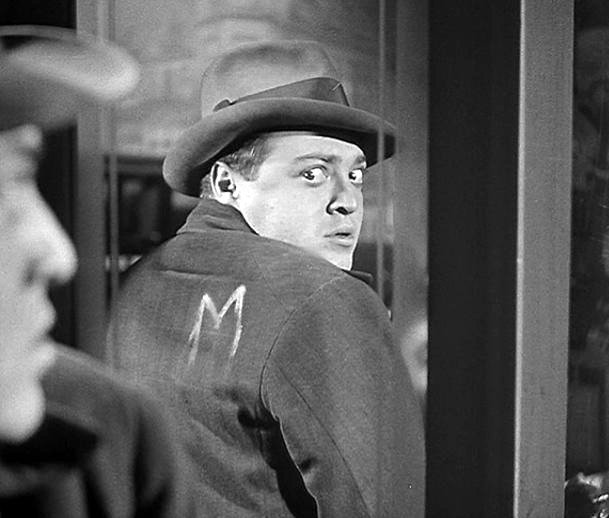
Hans Beckert (M)


Right below Mabuse, we have another villain from a Fritz Lang movie; Hans Beckert, the first, but certainly not last villain-protagonist to appear on this list. Hans is not the most formidable villain, in fact, he's pretty pathetic. However, he makes up for this being a genuinely interesting character, one that evokes both disgust and pity at the same time. One of the best examples of a tragic monster in film.

Lope de Aguirre (Aguirre: The Wrath of God)


Klaus Kinski was an actor who was pretty much born to play villains and I had a hard time choosing between his role as the eponymous character in Aguirre and that of Tigrero/Loco in The Great Silence. As you can see, the former won out in the end. Aguirre is a terrifying character,whose thirst for gold and power causes him to slip further and further into insanity. At the end of the movie, he keeps ranting about the dynasty he's going to form (by marrying his own daughter nonethless). Unfortunately for Aguirre, the only ones who can still hear him are the monkeys.

Louis Cypher (Angel Heart)


The Devil as played by Robert De Niro. Never has the simple act of eating a boiled egg come across as more sinister.

Antonio Salieri (Amadeus)


By all accounts, the real-life Salieri was not that bad a guy, he thought several young singers and compositors (one of his more famous pupils was Ludwig van Beethoven) and all but his wealthiest students received their education for free. The Salieri seen in Amadeus on the other hand, is a petty and murderous schemer, motivated chiefly by envy. However, what makes Salieri such a great villain is his complexity; while he despises Mozart, he clearly recognizes the latter's brilliance and acknowledges his genius. Which of course only furthers Salieri's resentment and underlying self-loathing, knowing that he's doomed to forever live in the shadow of his younger, more talented rival. Odd as it may seem, there were times in watching the movie when I felt for the guy.

Colonel Hans Landa (Inglorious Basterds)


Quentin Tarantino's filmography contains its fair share of memorable villains. My personal favorite is Hans Landa, the Nazi-villain of Inglorious Basterds. Easily the best character in the movie, Landa is quirky and affable, while also being ruthlessly effective at carrying out his task of hunting down escaped Jews. What's interesting about Landa is that he doesn't care about the Third Reich or Hitler, having no problem in selling them out when opportunity presents itself. This begs the question: What's more horrible? To fully believe in a system or ideology that commits numerous atrocities, including genocide, or to use said system to sate your own greed and opportunism?

Harry Powell (The Night of the Hunter)


Or "Preacher Harry Powell" as he insists upon calling himself (wonder if that's where the makers of Pirates of the Caribbean got the idea of Jack referring to himself as "Captain Jack Sparrow" from?). The handsome (Robert Mitchum, natch) but incredibly sinister Powell hunts his two step-children (after disposing of their mother) in the hopes of getting the money that the kids' biological father, Harry's cellmate, hid inside his daughter's doll. The Night of the Hunter is a movie that at times has a strange, dreamlike quality to it. However, this self-proclaimed preacher doesn't waste time turning the dream into a nightmare.

Michael Corleone (The Godfather Trilogy)


What's there to say about Michael Corleone? When we first meet him, he's the white sheep of the Corleone family; a war-hero who wants nothing to do with the family business. Unfortunately for Michael, events conspires against him and he's eventually forced to become the next Don, gradually transforming into a ruthless villain. Has there ever been a better portrayal of a man's fall from grace in cinema?

Ryonosuke Tsukue (Sword of Doom)


Out of the evil leads on this list, Ryonosuke is arguably the most evil (though Aguirre comes close). A master-swordsman, Ryonosuke travels the Japanese countryside, using his talents with the blade to indulge in various villainous deeds, mostly for his own amusement. Cruel, violent and ultimately self-destructive, this is one man for whom the term Bushido, simply doesn't exist.

So, there you have it: These were some of my favorite movie-villains. I hope that I succeeded in making you interested in checking out some of the movies these horrible, yet fascinating men and women appear in. Below are a list of honorable mentions; villains that I like, but I didn't write about in detail, because I felt the list was long enough already:

Roy Batty (Blade Runner) - Only not on the list because I'm not sure if he's a villain, as opposed to being "merely" an antagonist.
Daniel Plainview (There Will Be Blood)
Anton Chigurh (No Country For Old Men)
Capitan Vidal (Pan's Labyrinth)
Archibald Cunningham (Rob Roy)
Noah Cross (Chinatown)
Pretty much everyone except Alais (The Lion in Winter)
Claudandus (Felidae)
Dudley Smith (L.A. Confidential) - Better in the books, but still a good villain.
Col. Kurtz (Apocalypse Now)
Oh, and the following Disney-villains: Maleficent (Sleeping Beauty), Prof. Ratigan (The Great Mouse Detective) and Judge Claude Frollo (The Hunchback of Notre Dame)
And many more.


Thursday, August 20, 2015

District 14, Season 2


When I reviewed the first season of District 14 back in February, I heaped a lot of praise upon it. I loved the world that writer Pierre Gabus and artist Romuald Reutimann had created and the rich cast of characters they populated it with. As such, I was of course eager to read the second season of the comic, to see if it would live up to the standards set by its predecessor.
For those of you who haven't read my review of season 1, a brief introduction might be necessary: District 14 (original title: Cité 14) is a French comic which takes place in the eponymous district; a place populated by regular humans, anthropomorphic animals, aliens and even a superhero. The first season introduced us to this setting through the eyes of newly arrived immigrant, Michael Elizondo, a pachyderm who had left his homeland, due to circumstances which were revealed at the end of the season. Upon his arrival in District 14, Michael almost immediately ended up saving the life of journalistic beaver, Hector McKeagh, leading to the two striking a partnership, working as investigative reporters for one of the district's newspapers.


Season 2 begins where its predecessor ended; Michael's sickness has deformed him and causing him to grow increasingly violent. He has fallen into the thrall of a father-son team of monkeys, who knows about his past and forces him to steal for them in order to receive the leaves that can be used to slow down the progress of the sickness. At the same time, Hector, sets out to make peace with his past; first by investigating the rumors of contaminated water in the Covington Neighborhood, the part of the district where most of its alien inhabitants live, and second of all to spring Cloxm, one of the aliens' political leaders and the person Hector's dead wife, Belinda, left him for, out of prison.

As was the case with the first season, season 2 of District 14 sees Gabus juggling several plot-lines of varying importance and it it's a testament to his skill as a storyteller that he constantly kept me invested in what would happen next, no matter whether the focus was on Michael, Hector or any other character.
Speaking of characters, all the ones introduced in season 1 are back for this round (except for those who died during the course of that season's events) and several of the old characters, who only had walk-on roles in the first season, get fleshed out in this one. New characters are also introduced, among the more interesting are Bill and Joe, a couple of old-timers, who set out to avenge the death of an old friend (said friend was mentioned briefly in the first season) at the hands of the most powerful man in the city. Another memorable new introduction is the affably evil, bunny hit-man, Walter Lipoda.


As for Reutimann's artwork, I can't think of much to write about it. It continues to be very appealing to look at, and suits the overall tone of the comic very well, in my opinion.

Do I have anything negative to say about District 14's second season? Well, maybe there's the fact that at it ends with several plot-threads still left hanging. That said, I enjoyed my second visit to the District immensely and am looking forward to the upcoming third season.