I'd like to take this opportunity to wish any of my readers out there a Happy New Year. I hope you enjoyed visiting my blog and that you'll stop by in the future.
Next year, I shall strive to do my best to keep this place updated a bit more frequently.
See you in 2016, everybody.
Thursday, December 31, 2015

Friday, December 11, 2015
Delilah Dirk and the Turkish Lieutenant
If there's one type of story I've always had a great deal of affection for, its the historical adventure-story. Many of the authors who have had an influence on me over the years, such as Alexandre Dumas or George MacDonald Fraser, wrote in this genre. Small wonder than, that Tony Cliff's comic, Delilah Dirk and the Turkish Lieutenant, would catch my interest, the moment I first heard of it.

Delilah Dirk and the Turkish Lieutenant (and from hear on out, I'm just going to call it Delilah Dirk, for the sake of brevity), begins in Constantinople in the year 1807. Here we meet Erdemoglu Selim, a young lieutenant in the Sultan's Janissary Corps, a man whose sole desire is to live a peaceful life with plenty of opportunity to cultivate his chief-talent; making delicious tea. However, all that is about to change.Near the beginning of the story, Selim is tasked with interrogating a prisoner, who was caught trying to break into the palace to steal a collection of priceless scrolls. Said prisoner being none other than the international adventuress and globe-trotting troublemaker, Delilah Dirk. Through circumstances, Selim finds himself implicated in Delilah's escape and so, have no choice but to join her as her travelling companion, assisting her in her plans to steal a treasure right from under the nose of the feared pirate-captain, Zakul.

Delilah Dirk's greatest asset is, without a doubt, its two protagonists; both of whom are very engaging and likable characters. Delilah in particular is a splendid creation; a larger-than-life heroine, always ready to jump into the fray with a smile on her lips, armed with her quick wits and impressive martial-arts and sword-fighting skills. Selim, meanwhile, is the more down-to-earth character. The regular-guy, who discovers within himself greater courage and resourcefulness than he thought he possessed. During the course of the comic, Selim find himself increasingly more drawn to the new and dangerous, but exciting, life, he's been dragged into. The two of them have great chemistry and I really enjoyed seeing them brave various dangers together.
With Delilah Dirk. Tony Cliff has created a splendid adventure-comic, one that I'd recommend to any fan of the genre. A sequel titled Delilah Dirk and the King's Shilling is slated for release in 2016 and I for one forward to new adventures in the company of Miss Dirk and her Turkish lieutenant, once more.

Delilah Dirk and the Turkish Lieutenant (and from hear on out, I'm just going to call it Delilah Dirk, for the sake of brevity), begins in Constantinople in the year 1807. Here we meet Erdemoglu Selim, a young lieutenant in the Sultan's Janissary Corps, a man whose sole desire is to live a peaceful life with plenty of opportunity to cultivate his chief-talent; making delicious tea. However, all that is about to change.Near the beginning of the story, Selim is tasked with interrogating a prisoner, who was caught trying to break into the palace to steal a collection of priceless scrolls. Said prisoner being none other than the international adventuress and globe-trotting troublemaker, Delilah Dirk. Through circumstances, Selim finds himself implicated in Delilah's escape and so, have no choice but to join her as her travelling companion, assisting her in her plans to steal a treasure right from under the nose of the feared pirate-captain, Zakul.

Delilah Dirk's greatest asset is, without a doubt, its two protagonists; both of whom are very engaging and likable characters. Delilah in particular is a splendid creation; a larger-than-life heroine, always ready to jump into the fray with a smile on her lips, armed with her quick wits and impressive martial-arts and sword-fighting skills. Selim, meanwhile, is the more down-to-earth character. The regular-guy, who discovers within himself greater courage and resourcefulness than he thought he possessed. During the course of the comic, Selim find himself increasingly more drawn to the new and dangerous, but exciting, life, he's been dragged into. The two of them have great chemistry and I really enjoyed seeing them brave various dangers together.
With Delilah Dirk. Tony Cliff has created a splendid adventure-comic, one that I'd recommend to any fan of the genre. A sequel titled Delilah Dirk and the King's Shilling is slated for release in 2016 and I for one forward to new adventures in the company of Miss Dirk and her Turkish lieutenant, once more.
Wednesday, November 25, 2015
Blood Blockade Battlefront
Though I forgot to mention it, one of the shows I've been watching lately is Blood Blockade Battlefront and since I recently finished it, I decided that I should share my thoughts on the show, in some detail. Blood Blockade Battlefront (or Kekkai Sensen in original), is an anime based on a manga by Yasuhiro Nightow, creator of Trigun. I had read positive and negative reviews of the show on-line and thinking that the concept seemed interesting, I decided to check the show out myself. So, what did I think about it? Well, you'll just have to read on in order to find out.

Blood Blockade Battlefront is set in Hellsalem's Lot, which is actually New York City, a few years after dimensional rift opened up and creatures from another dimension decided to set up shop there. To this metropolis comes our main character, Leonardo Watch; a kid blessed (or cursed, depending on how you look at it) with a pair of magical eyes, on a quest to find a cure for his sister's blindness, which he feels responsible for. Due to circumstances, Leonard becomes a member of Libra, a secret society that protects Hellsalem's Lot from various dangers. He also end up befriending White, a girl who claims to be a ghost and her twin-brother Black, who was born with strong psychic powers.
That's the basic gist of things, as far as plot goes. Now, on to the actual, you know, review-portion of this review.
Let's start with the positives first, shall we? Blood Blockade Battlefront is an immensely, almost obscenely pretty show. The visuals are pure eye-candy and they do a great job at bringing the setting to life. Speaking of the setting, it deserves mention as well. Hellsalems' Lot makes for a great backdrop to Leo's adventures, while also feeling like a city where a million stories could be told, completely unrelated to anything that goes on in the actual show. In short, Hellsalem's Lot is, in my opinion, as much a character in the show as any of the people walking its streets. The soundtrack is similarly of a high quality and suits the tone of the show perfectly.

So, far, so good. But, what about the stuff that's really important? Namely, the writing. Unfortunately, this is where my gushing over the show stops, because quite frankly, the writing of Blood Blockade Battlefront is nowhere near as good as the above mentioned aspects. The characterization in particular is lacking with several members of the cast failing to leave a lasting impression. Libra as a whole is particularly bad in this regard; aside from Leo (who is after all, the main character) the only members of the organization in possession of distinct personalities are Klaus and Zapp and even than, they aren't exactly the most compelling characters. As for the other members; most of the time, they are just there. The only one whose name I can be bothered to remember is Chain and even she isn't really more memorable than say, the butler (at least I think he was a butler) with bandages covering his face. Honestly, it says a lot about the show that its best episode is the penultimate episode, which doesn't feature Libra at all. Instead this episode focuses on Black and White, their backstory and their connection to the show's big bad, a fellow who goes by the ominous moniker; "The King of Despair". I genuinely liked this episode and it gave me great hope that the show would gain a satisfying conclusion, unfortunately that was not the case: The final episode turned out to be a disappointment, to say the least. Despite the fact that there's an apocalypse of sorts going on, I never felt like the characters were in any danger or that the stakes really mattered.

As for the other episodes; some of them are fine (I quite liked the one in which Leo befriends the mushroom-guy, for example), but none of them really stand out.
I really wanted to like Blood Blockade Battlefront a lot more than I ended up doing. The show does a great job at sucking the viewer in, with its rich visuals, great music and interesting setting. Unfortunately, the show is too flawed in every other regard for me to recommend it. A shame, because it definitely had potential.

Blood Blockade Battlefront is set in Hellsalem's Lot, which is actually New York City, a few years after dimensional rift opened up and creatures from another dimension decided to set up shop there. To this metropolis comes our main character, Leonardo Watch; a kid blessed (or cursed, depending on how you look at it) with a pair of magical eyes, on a quest to find a cure for his sister's blindness, which he feels responsible for. Due to circumstances, Leonard becomes a member of Libra, a secret society that protects Hellsalem's Lot from various dangers. He also end up befriending White, a girl who claims to be a ghost and her twin-brother Black, who was born with strong psychic powers.
That's the basic gist of things, as far as plot goes. Now, on to the actual, you know, review-portion of this review.
Let's start with the positives first, shall we? Blood Blockade Battlefront is an immensely, almost obscenely pretty show. The visuals are pure eye-candy and they do a great job at bringing the setting to life. Speaking of the setting, it deserves mention as well. Hellsalems' Lot makes for a great backdrop to Leo's adventures, while also feeling like a city where a million stories could be told, completely unrelated to anything that goes on in the actual show. In short, Hellsalem's Lot is, in my opinion, as much a character in the show as any of the people walking its streets. The soundtrack is similarly of a high quality and suits the tone of the show perfectly.

So, far, so good. But, what about the stuff that's really important? Namely, the writing. Unfortunately, this is where my gushing over the show stops, because quite frankly, the writing of Blood Blockade Battlefront is nowhere near as good as the above mentioned aspects. The characterization in particular is lacking with several members of the cast failing to leave a lasting impression. Libra as a whole is particularly bad in this regard; aside from Leo (who is after all, the main character) the only members of the organization in possession of distinct personalities are Klaus and Zapp and even than, they aren't exactly the most compelling characters. As for the other members; most of the time, they are just there. The only one whose name I can be bothered to remember is Chain and even she isn't really more memorable than say, the butler (at least I think he was a butler) with bandages covering his face. Honestly, it says a lot about the show that its best episode is the penultimate episode, which doesn't feature Libra at all. Instead this episode focuses on Black and White, their backstory and their connection to the show's big bad, a fellow who goes by the ominous moniker; "The King of Despair". I genuinely liked this episode and it gave me great hope that the show would gain a satisfying conclusion, unfortunately that was not the case: The final episode turned out to be a disappointment, to say the least. Despite the fact that there's an apocalypse of sorts going on, I never felt like the characters were in any danger or that the stakes really mattered.

As for the other episodes; some of them are fine (I quite liked the one in which Leo befriends the mushroom-guy, for example), but none of them really stand out.
I really wanted to like Blood Blockade Battlefront a lot more than I ended up doing. The show does a great job at sucking the viewer in, with its rich visuals, great music and interesting setting. Unfortunately, the show is too flawed in every other regard for me to recommend it. A shame, because it definitely had potential.
Friday, November 13, 2015
The Iliad at the Almeida
Somehow, I managed to miss the Almeida Theatre's live-reading of The Illiad when it was first streamed, but fortunately, the whole thing is still available on their site until 2016. I strongly recommend giving it a listen; the various readers (which include among others Brian Cox and John Simm) does a great job at bringing this great work of literature, with all its passions and intensities, to life.
Here's a link
Here's a link
Friday, October 30, 2015
Last Days Of An Immortal
Despite the fact that I haven't read nearly all of his work, I feel confident in saying that the French comic-writer Fabien Vehlmann, has quickly become one of my favorite people currently working in the medium. The first thing I read by Vehlmann was The Isle of 10.000 Graves, drawn by Jason; a really good comic which was followed by Beautiful Darkness, drawn by Kerascoët (I'm going to point out that both Jason and Kerascoët are pseudonyms, just in case you were wondering). Oh, and I can think of few comics that live up to its title as well as Beautiful Darkness does. Kerascoët's water-color drawings are indeed beautiful to look at and as for the "darkness" part of the title? Well, let's just say that the comic features enough death and callous cruelty for it to qualify as dark by any definition of the term.
That said, while both of the above comics are well worth reading and come highly recommended, my favorite title that I've read from Vehlmann so far is Last Days Of An Immortal, which (surprise) is the subject of this post.


Last Days Of An Immortal takes place in the very distant future. Humanity has long since travelled through the distant stars and are now living side by side with various alien species. In addition, mankind now possesses the technology to create 100% complete copies of an individual. These copies, called echoes, retain all the personality-traits and memories of the original. Once the echoes have finished carrying out their task, they merge with the primary body, which gain all the knowledge and memories that the echoes have acquired. Oh, and if the primary should happen to die, than one of the echoes can be turned into a primary body, meaning that humans have basically become immortal. There is a catch to this however, whenever a person creates an echo they loose some of their oldest memories. In addition, Elijah, the main character of the comic is a member of the Philosopher-Police, an organization dedicated to resolve what ever conflicts or cultural clashes that will inevitably occur when humans and aliens interact with one another. The plot of the comic revolves around Elijah being put in charge of investigating a murder that occurred many centuries ago, but is now causing conflict between two vastly different alien-species, both inhabiting the same planet.


While the plot and characters are really good, what truly stands out in this comic, as far as I'm concerned, is the setting. The various extraterrestrial civilizations presented to the reader are especially fascinating. Most of them do indeed come off as a completely alien, with customs and traditions totally different from those on Earth. For example, there's one civilization whose entire culture is basically a gigantic play, with each citizen receiving a script, which assigns them their status, sexual orientation, etc. There's another whose members communicate by taste and those are just some examples.
Finally, a few words about the art-work. The artist, Gwen de Bonnevall does a great job at bringing life to this world and its inhabitants, humans as well as alien. At first glance, Bonnevall's artwork may seem sparse, but there's an elegance to it that I find appealing. He's also very good at conveying the emotions of the characters; whether its sadness, joy or rage.

All in all, Last Days Of An Immortal ranks for me among the best works the genre has to offer. If you want a truly engrossing piece of science-fiction mystery, set in a creative and visually interesting setting and featuring a highly engaging protagonist, I strongly urge you to check it out.
Finally, a few words about the art-work. The artist, Gwen de Bonnevall does a great job at bringing life to this world and its inhabitants, humans as well as alien. At first glance, Bonnevall's artwork may seem sparse, but there's an elegance to it that I find appealing. He's also very good at conveying the emotions of the characters; whether its sadness, joy or rage.

All in all, Last Days Of An Immortal ranks for me among the best works the genre has to offer. If you want a truly engrossing piece of science-fiction mystery, set in a creative and visually interesting setting and featuring a highly engaging protagonist, I strongly urge you to check it out.
Monday, October 12, 2015
Favorite Adventure Games
Ever since a cousin of mine introduced me to Day of the Tentacle, back when I was a child, the graphic adventure (or point & click adventure, as it has also been called), has been my favorite type of game, rivaled only by the RPG. As such, I thought it high-time that I paid some tribute to this genre, by showcasing what I consider to be some of the best games it has to offer. Are you ready? Well, than, let's jump right in.

Seeing as how this was the first graphic adventure I played from start to finish, its only fitting that Day of the Tentacle kicks off this list. However, its not just sentimentality that makes this game earn a place on it. While Day of the Tentacle may no longer be my favorite game (or even favorite adventure-game, for that matter), I can not argue with any list who puts it in the top-spot. Day of the Tentacle is one of those games that does pretty much everything right; everything from the cartoony graphics, to the puzzles, to the humor of the game are terrific. Created by LucasArts. the uncrowned king of the genre at the height of its power, Day of the Tentacle is, in many ways, what all adventure games should strive to be.

No list of great adventure-games is truly complete without at least one Monkey Island title on it and while everyone has their own favorite game in this series; LucasArts' flagship title, which focused on the adventures and misadventures of Guybrush Threepwood ("Mighty pirate!"), I'd have to go with the second one. LeChuck's Revenge is everything a worthy sequel should be, being bigger and better than its predecessor, with more locations to visit, more puzzles and more characters. The second (and longest) part of the game, where you are free to travel between various islands in order to find all the map-pieces is pure adventure-bliss that anyone interested in the genre should experience at least once. Also, this game features one of the most memorable endings of any game I can think of.

Easily as good as Raiders of the lost Ark and better than any of the subsequent movies, Fate of Atlantis has everything that a fan of everyone's favorite whip-wielding archaeologist/grave-robber could want from an Indiana Jones game. As Indy you have to race to stop the Nazis from exploiting the ancient technology of Atlantis for their own nefarious purposes. There are three different paths you can take in order to reach the lost city; one path puts the focus on traditional puzzle-solving, the second on action and the final one has you collaborating with the game's heroine, Sophia Hapgood (who rivals Marion as the best female character in the franchise). Regardless of which path you choose, Fate of Atlantis is a great game. Seriously, screw Crystal Skull. For me, this game will always be the real Indiana Jones IV.

The last truly great adventure-game to come out of LucasArts and in many ways the company's magnum opus. Although the new keyboard-controlled interface could take a bit of time to get used to, compared to the old "point & click"-ways, the richness of the plot and the characters more than make for any of that. In fact, Grim Fandango in my opinion, has the best plot of any LucasArts' game and its set in a brilliantly realized world influenced both by Mexican tradition and classic film-noir tropes. If I have any complaints about this game, I guess it would be that the last half of it isn't as interesting as the first one (a flaw it shares with Monkey Island 2, by the way). However, that's small stuff. everyone should experience the after-life with Manny Calavera as their tour-guide, at least once before they shuffle off the mortal coil for real.

Back in the genre's heydays, Sierra Entertainment was LucasArts' rival for the much coveted "King of Adventure Games" -title and although the quality of Sierra's products tended to be more inconsistent than those of its rival, when they were good, they were damn good. The finest game to come out of Sierra was Gabriel Knight: Sins of the Fathers, the first in a trilogy by Jane Jensen. Like its sequels, Sins of the Fathers was a mature game in all the right ways, featuring believable characters and a gripping, complex plot that dealt with themes like revenge, guilt and redemption. The two sequels are also good (a rather infamous puzzle in the third game not withstanding), but the first installment is my favorite. Had this been the only game featuring Gabriel and his assistant Grace Nakimura she had made, Jane Jensen would still have earned her place among gaming's great storytellers.

Next to Gabriel Knight, my favorite series to come out from Sierra would be Quest For Glory, an adventure/RPG hybrid created by husband-and-wife team Lori Ann and Corey Cole. The best game in the series, in my opinion, is the fourth one, Shadows of Darkness which takes place in the land of Moldavia, a land which the forces of evil has a strong grip on. There are several reasons why Quest For Glory IV is one of my favorite adventure-games; the plot is the best one in the series, with influences from both Bram Stoker and H.P. Lovecraft, as well as Russian folklore. The characters are memorable, including the antagonist, who is one of the best in all gaming and it features John-Rhys Davies as the narrator, what more could one possibly want?

Under A Killing Moon, the third game in Access' series about Tex Murphy, the down-on-his luck P.I., who continually gets caught up in cases in which it turns out that the World itself is at stake, was an innovative game in many ways; featuring an immersive 3-d environment. in which the player could hide behind doors, look for clues underneath desk-drawers, among other thing. However, it was also held back by some amateurish acting (Chris Jones would improve in later games) and a pretty cheesy plot, with a villain whose plan was lifted from Moonraker. of all things. Its sequel, The Pandora Directive took everything that was good about Under A Killing Moon and improved upon it. One of the most interesting aspects of the game was the opportunity to lead Tex down various paths, leading to several different endings, some of them happy, others less so.

Jordan Mechner may be most famous for having created the Prince of Persia series, but in my opinion, his finest work is this game. The Last Express puts the player in the role of Robert Cath, a doctor, who finds himself aboard the Orient Express at the dawn of the first World War.
One of the most unique things about The Last Express is the fact that the game takes place in real-time with all the characters you meet having their own schedules. This means that you have to choose carefully what you're going to do next, whether its to meet a character in order to dig out information from them or wait until the character is gone order to go through their stuff, among other choices. The plot of the game is also very strong, being a mystery in true Agatha Christie-fashion, which successfully uses the political upheavals of the time as a back-drop. Oh, and did I mention that the characters all speak in their own native language, with the Russian passengers talking Russian and so on? How often do you see that? Not just in games, but media in general? The Last Express is by far the classiest adventure-game I've played.

Last but not least, we have The Wolf Among Us. I've actually written about this game before, so, I recommend reading my old review of it if you want more details. While The Walking Dead: Season 1 was the game that truly put Telltale on the map, this is my favorite out of the ones I've played from them, so far. Here's hoping we get a sequel at some point.
Day of the Tentacle (LucasArts, 1993)

Seeing as how this was the first graphic adventure I played from start to finish, its only fitting that Day of the Tentacle kicks off this list. However, its not just sentimentality that makes this game earn a place on it. While Day of the Tentacle may no longer be my favorite game (or even favorite adventure-game, for that matter), I can not argue with any list who puts it in the top-spot. Day of the Tentacle is one of those games that does pretty much everything right; everything from the cartoony graphics, to the puzzles, to the humor of the game are terrific. Created by LucasArts. the uncrowned king of the genre at the height of its power, Day of the Tentacle is, in many ways, what all adventure games should strive to be.
Monkey Island 2: LeChuck's Revenge (LucasArts, 1991)

No list of great adventure-games is truly complete without at least one Monkey Island title on it and while everyone has their own favorite game in this series; LucasArts' flagship title, which focused on the adventures and misadventures of Guybrush Threepwood ("Mighty pirate!"), I'd have to go with the second one. LeChuck's Revenge is everything a worthy sequel should be, being bigger and better than its predecessor, with more locations to visit, more puzzles and more characters. The second (and longest) part of the game, where you are free to travel between various islands in order to find all the map-pieces is pure adventure-bliss that anyone interested in the genre should experience at least once. Also, this game features one of the most memorable endings of any game I can think of.
Indiana Jones and the Fate of Atlantis (LucasArts, 1992)

Easily as good as Raiders of the lost Ark and better than any of the subsequent movies, Fate of Atlantis has everything that a fan of everyone's favorite whip-wielding archaeologist/grave-robber could want from an Indiana Jones game. As Indy you have to race to stop the Nazis from exploiting the ancient technology of Atlantis for their own nefarious purposes. There are three different paths you can take in order to reach the lost city; one path puts the focus on traditional puzzle-solving, the second on action and the final one has you collaborating with the game's heroine, Sophia Hapgood (who rivals Marion as the best female character in the franchise). Regardless of which path you choose, Fate of Atlantis is a great game. Seriously, screw Crystal Skull. For me, this game will always be the real Indiana Jones IV.
Grim Fandango (LucasArts, 1998)

The last truly great adventure-game to come out of LucasArts and in many ways the company's magnum opus. Although the new keyboard-controlled interface could take a bit of time to get used to, compared to the old "point & click"-ways, the richness of the plot and the characters more than make for any of that. In fact, Grim Fandango in my opinion, has the best plot of any LucasArts' game and its set in a brilliantly realized world influenced both by Mexican tradition and classic film-noir tropes. If I have any complaints about this game, I guess it would be that the last half of it isn't as interesting as the first one (a flaw it shares with Monkey Island 2, by the way). However, that's small stuff. everyone should experience the after-life with Manny Calavera as their tour-guide, at least once before they shuffle off the mortal coil for real.
Gabriel Knight: Sins of the Fathers (Sierra, 1993)

Back in the genre's heydays, Sierra Entertainment was LucasArts' rival for the much coveted "King of Adventure Games" -title and although the quality of Sierra's products tended to be more inconsistent than those of its rival, when they were good, they were damn good. The finest game to come out of Sierra was Gabriel Knight: Sins of the Fathers, the first in a trilogy by Jane Jensen. Like its sequels, Sins of the Fathers was a mature game in all the right ways, featuring believable characters and a gripping, complex plot that dealt with themes like revenge, guilt and redemption. The two sequels are also good (a rather infamous puzzle in the third game not withstanding), but the first installment is my favorite. Had this been the only game featuring Gabriel and his assistant Grace Nakimura she had made, Jane Jensen would still have earned her place among gaming's great storytellers.
Quest For Glory IV: Shadows of Darkness (Sierra, 1994)

Next to Gabriel Knight, my favorite series to come out from Sierra would be Quest For Glory, an adventure/RPG hybrid created by husband-and-wife team Lori Ann and Corey Cole. The best game in the series, in my opinion, is the fourth one, Shadows of Darkness which takes place in the land of Moldavia, a land which the forces of evil has a strong grip on. There are several reasons why Quest For Glory IV is one of my favorite adventure-games; the plot is the best one in the series, with influences from both Bram Stoker and H.P. Lovecraft, as well as Russian folklore. The characters are memorable, including the antagonist, who is one of the best in all gaming and it features John-Rhys Davies as the narrator, what more could one possibly want?
Tex Murphy: The Pandora Directive (Access, 1996)

Under A Killing Moon, the third game in Access' series about Tex Murphy, the down-on-his luck P.I., who continually gets caught up in cases in which it turns out that the World itself is at stake, was an innovative game in many ways; featuring an immersive 3-d environment. in which the player could hide behind doors, look for clues underneath desk-drawers, among other thing. However, it was also held back by some amateurish acting (Chris Jones would improve in later games) and a pretty cheesy plot, with a villain whose plan was lifted from Moonraker. of all things. Its sequel, The Pandora Directive took everything that was good about Under A Killing Moon and improved upon it. One of the most interesting aspects of the game was the opportunity to lead Tex down various paths, leading to several different endings, some of them happy, others less so.
The Last Express (Smoking Car Productions, 1997)

Jordan Mechner may be most famous for having created the Prince of Persia series, but in my opinion, his finest work is this game. The Last Express puts the player in the role of Robert Cath, a doctor, who finds himself aboard the Orient Express at the dawn of the first World War.
One of the most unique things about The Last Express is the fact that the game takes place in real-time with all the characters you meet having their own schedules. This means that you have to choose carefully what you're going to do next, whether its to meet a character in order to dig out information from them or wait until the character is gone order to go through their stuff, among other choices. The plot of the game is also very strong, being a mystery in true Agatha Christie-fashion, which successfully uses the political upheavals of the time as a back-drop. Oh, and did I mention that the characters all speak in their own native language, with the Russian passengers talking Russian and so on? How often do you see that? Not just in games, but media in general? The Last Express is by far the classiest adventure-game I've played.
The Wolf Among Us (Telltale, 2013)

*****
Well, that's it for now. If you haven't already played any of these games, than I hope I've made you interested in checking at least one of them out. Most of them are available via Good Old Games or Steam, so they're quite easy to get ahold of.
Until next time, dear reader.
Saturday, September 26, 2015
Comics That Should Be Translated: Ibicus
Russia, 1917, Simeon Nevzorov was once told by a fortuneteller that during a time of great upheaval, he would be rich. Now, the revolution is here and the czarist regime is about to be swept away forever. Its the moment Simeon's been waiting for! Believing wholeheartedly in the fortuneteller's prophecy, he embarks on a quest for the wealth and power that he believes is his destiny to obtain.

Ibicus is an adaptation of the novel written by Alexei Tolstoy, made by french cartoonist and movie director, Pascal Rabaté. Rabaté bought the book, thinking that it was by Leo. When he discovered his mistake, Rabaté put the book aside, to save it for a time when he was out of things to read. Naturally, such a thing occurred eventually, and soon Rabaté found himself reading the book he had bought by mistake. He ended up liking Ibicus so much, that he decided to adapt into a comic.
Having not read the original novel, Ibicus (in fact, before discovering the comic I had never heard of it, nor of Alexei Tolstoy for that matter), I can not say how faithful the adaptation is to the source-material. On the back of the first volume (which is also where I got the above information from), Rabaté states that its a free adaptation, but that he has tried to respect the spirit of the author. I can say, that it made me curious about checking out the novel, though, if I can manage to get a hold of a copy.

The first thing that strikes a reader upon opening the first volume of Ibicus is Rabaté's artwork. I must admit that it took me awhile to get used to the style used by Rabaté for this comic, which is strongly influenced by impressionistic painting, but it soon grew on me. Rabaté is especially good at using light and shadow to convey atmosphere and there are certain scenes and panels in Ibicus, that, in my opinion, has a cinematic quality to them. That said, the artwork of Ibicus is definitely an acquired taste, but than again, can't you say that about pretty much everything?
That said, at the end of the day, yours truly is a plot-guy more than an art-guy (even if he obviously appreciates good art, comics is a visual medium, after all). So, what did I think of the story? Well, I doubt that I will surprise many of you, if I revealed that I found the writing of Ibicus to be great. Once again, I can't say how much that is thanks to Tolstoy and how much of it is Rabaté (once I've read the novel, I should write something about it, in order to compare it with the comic). but the plotting and characterization is both of a consistently high quality and succeeds both at the big, suspenseful moments and the quieter, more character-focused scenes.
The best thing about Ibicus though, at least writing-wise, is its central character. Simeon Nevzorov makes for a great protagonist. Like most anti-heroes, his character is stained with flaws, among which we may count greed, opportunism and pretentiousness (he styles himself as count Nevzorov, a title no-one buys; at one point, another character mockingly says "Count? Why not Czar while you're at it?"). In short, he's the type of character that you probably wouldn't want to be around in real life, but who is very interesting to read about.
In the end, regardless whether its faithful to its source-material or not, Ibicus remains a great comic and one that is definitely deserving of getting an English translation.

Ibicus is an adaptation of the novel written by Alexei Tolstoy, made by french cartoonist and movie director, Pascal Rabaté. Rabaté bought the book, thinking that it was by Leo. When he discovered his mistake, Rabaté put the book aside, to save it for a time when he was out of things to read. Naturally, such a thing occurred eventually, and soon Rabaté found himself reading the book he had bought by mistake. He ended up liking Ibicus so much, that he decided to adapt into a comic.
Having not read the original novel, Ibicus (in fact, before discovering the comic I had never heard of it, nor of Alexei Tolstoy for that matter), I can not say how faithful the adaptation is to the source-material. On the back of the first volume (which is also where I got the above information from), Rabaté states that its a free adaptation, but that he has tried to respect the spirit of the author. I can say, that it made me curious about checking out the novel, though, if I can manage to get a hold of a copy.

The first thing that strikes a reader upon opening the first volume of Ibicus is Rabaté's artwork. I must admit that it took me awhile to get used to the style used by Rabaté for this comic, which is strongly influenced by impressionistic painting, but it soon grew on me. Rabaté is especially good at using light and shadow to convey atmosphere and there are certain scenes and panels in Ibicus, that, in my opinion, has a cinematic quality to them. That said, the artwork of Ibicus is definitely an acquired taste, but than again, can't you say that about pretty much everything?
That said, at the end of the day, yours truly is a plot-guy more than an art-guy (even if he obviously appreciates good art, comics is a visual medium, after all). So, what did I think of the story? Well, I doubt that I will surprise many of you, if I revealed that I found the writing of Ibicus to be great. Once again, I can't say how much that is thanks to Tolstoy and how much of it is Rabaté (once I've read the novel, I should write something about it, in order to compare it with the comic). but the plotting and characterization is both of a consistently high quality and succeeds both at the big, suspenseful moments and the quieter, more character-focused scenes.
The best thing about Ibicus though, at least writing-wise, is its central character. Simeon Nevzorov makes for a great protagonist. Like most anti-heroes, his character is stained with flaws, among which we may count greed, opportunism and pretentiousness (he styles himself as count Nevzorov, a title no-one buys; at one point, another character mockingly says "Count? Why not Czar while you're at it?"). In short, he's the type of character that you probably wouldn't want to be around in real life, but who is very interesting to read about.
In the end, regardless whether its faithful to its source-material or not, Ibicus remains a great comic and one that is definitely deserving of getting an English translation.
Monday, September 14, 2015
Favorite Movie Villains
Alfred Hitchcock once said that the more successful the villain is, the more successful is the movie (or something like that) and while a movie doesn't necessarily require a villain in order to be a great, its true that the presence of a great villain can take an already good movie to new heights. With that in mind, here are some of my favorite cinematic bad guys (and girls) presented in no particular order. I hope you enjoy this list and that it will make you curious to check out the movies these evil-doers hail from, unless you haven't already.
Oh, yes, there will be some spoilers here. Although to be fair, some of these movies are so old that the spoilers are pretty much public knowledge and the movies presented here are good enough that knowing some plot-points really shouldn't take away from the enjoyment of the movie in question.
Frank (Once Upon A Time in the West)

My favorite Sergio Leone villain and my favorite villain in a Spaghetti-Western. It was a true stroke of genius on Leone's part to cast Henry Fonda, an actor mostly know for playing morally upright heroes, as the arch-villain of this movie. I can only imagine the surprise of the audience at the time when they witnessed Frank and his henchmen murdering an entire family in cold blood (including shooting a kid in the back) only for the camera to reveal that the man behind this mayhem is none other than Juror #8 himself. Has there ever been a better example of casting against type?
Lady Kaede (Ran)

I've written about her before. Akira Kurosawa's Ran may have been based on King Lear, but Kaede, the wife of Taro, eldest son of Lord Hidetora, leader of clan Ichimonji, doesn't really have a counterpart among Lear's rogues-gallery. After Hidetora relinquishes power to his three sons, Kaede wastes no time convincing Taro to claim sole leadership of the clan plunging the region into civil war. So, she's a Lady MacBeth character, then? Not really, because unlike the Thane of Cawdor's wife, Kaede is motivated not by power (or what she believes is best for her husband), but by a thirst for vengeance: Her family having been killed during Hidetora's conquests, Kaede seeks the complete annihilation of clan Ichimonji. The fact that this would also mean the deaths of hundreds of innocent lives is not something that bothers her very much. Manipulative, cold-hearted and bloodthirsty, Lady Kaede is one of cinema's great villains.
Harry Lime (The Third Man)

Sometimes, a villain can dominate the plot of a movie without appearing that much in it. Case in point; Harry Lime in The Third Man. Lime doesn't get many scenes, but every scene he's in is memorable, from his entrance to his dialogue with former childhood friend Holly Martins aboard the Ferris-wheel, they all count among some of the finest moments in cinema. Personality-wise, Lime is a trickster-character. He's so affable and fascinating that its quite easy to forget that underneath the charm, Lime is utter scum; A racketeer who cares for no-one but himself and the profits he can make. The radio-drama, The Lives of Harry Lime, softened the character somewhat, making him into more of an anti-hero, but its as the villain of The Third Man that Lime will always be remembered.
Phyllis Dietrichson (Double Indemnity)

Well, what can one say? Pretty much the archetypical film-noir femme fatale.
Dr. Mabuse (Dr. Mabuse the Gambler and The Testament of Dr. Mabuse)

I admit that I have a soft spot for the criminal mastermind type of villain and in that category, you can't do much better than Dr. Mabuse. Mabuse wants world-domination (it comes with the job), but unlike most villains of his type, watching him you can't help but feel a bit worried that he might actually achieve it. In the second movie, Mabuse has spent ten years in a mental hospital following his breakdown at the end of the first, but that doesn't stop the good doctor from sowing more chaos. Yeah, this guy is pretty much my favorite cinematic super-villain.
Hans Beckert (M)

Right below Mabuse, we have another villain from a Fritz Lang movie; Hans Beckert, the first, but certainly not last villain-protagonist to appear on this list. Hans is not the most formidable villain, in fact, he's pretty pathetic. However, he makes up for this being a genuinely interesting character, one that evokes both disgust and pity at the same time. One of the best examples of a tragic monster in film.
Lope de Aguirre (Aguirre: The Wrath of God)

Klaus Kinski was an actor who was pretty much born to play villains and I had a hard time choosing between his role as the eponymous character in Aguirre and that of Tigrero/Loco in The Great Silence. As you can see, the former won out in the end. Aguirre is a terrifying character,whose thirst for gold and power causes him to slip further and further into insanity. At the end of the movie, he keeps ranting about the dynasty he's going to form (by marrying his own daughter nonethless). Unfortunately for Aguirre, the only ones who can still hear him are the monkeys.
Louis Cypher (Angel Heart)

The Devil as played by Robert De Niro. Never has the simple act of eating a boiled egg come across as more sinister.
Antonio Salieri (Amadeus)

By all accounts, the real-life Salieri was not that bad a guy, he thought several young singers and compositors (one of his more famous pupils was Ludwig van Beethoven) and all but his wealthiest students received their education for free. The Salieri seen in Amadeus on the other hand, is a petty and murderous schemer, motivated chiefly by envy. However, what makes Salieri such a great villain is his complexity; while he despises Mozart, he clearly recognizes the latter's brilliance and acknowledges his genius. Which of course only furthers Salieri's resentment and underlying self-loathing, knowing that he's doomed to forever live in the shadow of his younger, more talented rival. Odd as it may seem, there were times in watching the movie when I felt for the guy.
Colonel Hans Landa (Inglorious Basterds)

Quentin Tarantino's filmography contains its fair share of memorable villains. My personal favorite is Hans Landa, the Nazi-villain of Inglorious Basterds. Easily the best character in the movie, Landa is quirky and affable, while also being ruthlessly effective at carrying out his task of hunting down escaped Jews. What's interesting about Landa is that he doesn't care about the Third Reich or Hitler, having no problem in selling them out when opportunity presents itself. This begs the question: What's more horrible? To fully believe in a system or ideology that commits numerous atrocities, including genocide, or to use said system to sate your own greed and opportunism?
Harry Powell (The Night of the Hunter)

Or "Preacher Harry Powell" as he insists upon calling himself (wonder if that's where the makers of Pirates of the Caribbean got the idea of Jack referring to himself as "Captain Jack Sparrow" from?). The handsome (Robert Mitchum, natch) but incredibly sinister Powell hunts his two step-children (after disposing of their mother) in the hopes of getting the money that the kids' biological father, Harry's cellmate, hid inside his daughter's doll. The Night of the Hunter is a movie that at times has a strange, dreamlike quality to it. However, this self-proclaimed preacher doesn't waste time turning the dream into a nightmare.
Michael Corleone (The Godfather Trilogy)

What's there to say about Michael Corleone? When we first meet him, he's the white sheep of the Corleone family; a war-hero who wants nothing to do with the family business. Unfortunately for Michael, events conspires against him and he's eventually forced to become the next Don, gradually transforming into a ruthless villain. Has there ever been a better portrayal of a man's fall from grace in cinema?
Ryonosuke Tsukue (Sword of Doom)

Out of the evil leads on this list, Ryonosuke is arguably the most evil (though Aguirre comes close). A master-swordsman, Ryonosuke travels the Japanese countryside, using his talents with the blade to indulge in various villainous deeds, mostly for his own amusement. Cruel, violent and ultimately self-destructive, this is one man for whom the term Bushido, simply doesn't exist.
So, there you have it: These were some of my favorite movie-villains. I hope that I succeeded in making you interested in checking out some of the movies these horrible, yet fascinating men and women appear in. Below are a list of honorable mentions; villains that I like, but I didn't write about in detail, because I felt the list was long enough already:
Roy Batty (Blade Runner) - Only not on the list because I'm not sure if he's a villain, as opposed to being "merely" an antagonist.
Daniel Plainview (There Will Be Blood)
Anton Chigurh (No Country For Old Men)
Capitan Vidal (Pan's Labyrinth)
Archibald Cunningham (Rob Roy)
Noah Cross (Chinatown)
Pretty much everyone except Alais (The Lion in Winter)
Claudandus (Felidae)
Dudley Smith (L.A. Confidential) - Better in the books, but still a good villain.
Col. Kurtz (Apocalypse Now)
Oh, and the following Disney-villains: Maleficent (Sleeping Beauty), Prof. Ratigan (The Great Mouse Detective) and Judge Claude Frollo (The Hunchback of Notre Dame)
And many more.
Oh, yes, there will be some spoilers here. Although to be fair, some of these movies are so old that the spoilers are pretty much public knowledge and the movies presented here are good enough that knowing some plot-points really shouldn't take away from the enjoyment of the movie in question.
Frank (Once Upon A Time in the West)

My favorite Sergio Leone villain and my favorite villain in a Spaghetti-Western. It was a true stroke of genius on Leone's part to cast Henry Fonda, an actor mostly know for playing morally upright heroes, as the arch-villain of this movie. I can only imagine the surprise of the audience at the time when they witnessed Frank and his henchmen murdering an entire family in cold blood (including shooting a kid in the back) only for the camera to reveal that the man behind this mayhem is none other than Juror #8 himself. Has there ever been a better example of casting against type?
Lady Kaede (Ran)

I've written about her before. Akira Kurosawa's Ran may have been based on King Lear, but Kaede, the wife of Taro, eldest son of Lord Hidetora, leader of clan Ichimonji, doesn't really have a counterpart among Lear's rogues-gallery. After Hidetora relinquishes power to his three sons, Kaede wastes no time convincing Taro to claim sole leadership of the clan plunging the region into civil war. So, she's a Lady MacBeth character, then? Not really, because unlike the Thane of Cawdor's wife, Kaede is motivated not by power (or what she believes is best for her husband), but by a thirst for vengeance: Her family having been killed during Hidetora's conquests, Kaede seeks the complete annihilation of clan Ichimonji. The fact that this would also mean the deaths of hundreds of innocent lives is not something that bothers her very much. Manipulative, cold-hearted and bloodthirsty, Lady Kaede is one of cinema's great villains.
Harry Lime (The Third Man)

Sometimes, a villain can dominate the plot of a movie without appearing that much in it. Case in point; Harry Lime in The Third Man. Lime doesn't get many scenes, but every scene he's in is memorable, from his entrance to his dialogue with former childhood friend Holly Martins aboard the Ferris-wheel, they all count among some of the finest moments in cinema. Personality-wise, Lime is a trickster-character. He's so affable and fascinating that its quite easy to forget that underneath the charm, Lime is utter scum; A racketeer who cares for no-one but himself and the profits he can make. The radio-drama, The Lives of Harry Lime, softened the character somewhat, making him into more of an anti-hero, but its as the villain of The Third Man that Lime will always be remembered.
Phyllis Dietrichson (Double Indemnity)

Well, what can one say? Pretty much the archetypical film-noir femme fatale.
Dr. Mabuse (Dr. Mabuse the Gambler and The Testament of Dr. Mabuse)

I admit that I have a soft spot for the criminal mastermind type of villain and in that category, you can't do much better than Dr. Mabuse. Mabuse wants world-domination (it comes with the job), but unlike most villains of his type, watching him you can't help but feel a bit worried that he might actually achieve it. In the second movie, Mabuse has spent ten years in a mental hospital following his breakdown at the end of the first, but that doesn't stop the good doctor from sowing more chaos. Yeah, this guy is pretty much my favorite cinematic super-villain.
Hans Beckert (M)
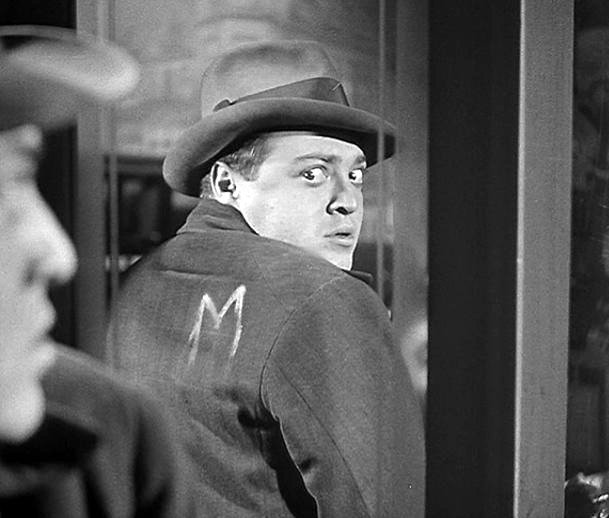
Right below Mabuse, we have another villain from a Fritz Lang movie; Hans Beckert, the first, but certainly not last villain-protagonist to appear on this list. Hans is not the most formidable villain, in fact, he's pretty pathetic. However, he makes up for this being a genuinely interesting character, one that evokes both disgust and pity at the same time. One of the best examples of a tragic monster in film.
Lope de Aguirre (Aguirre: The Wrath of God)

Klaus Kinski was an actor who was pretty much born to play villains and I had a hard time choosing between his role as the eponymous character in Aguirre and that of Tigrero/Loco in The Great Silence. As you can see, the former won out in the end. Aguirre is a terrifying character,whose thirst for gold and power causes him to slip further and further into insanity. At the end of the movie, he keeps ranting about the dynasty he's going to form (by marrying his own daughter nonethless). Unfortunately for Aguirre, the only ones who can still hear him are the monkeys.
Louis Cypher (Angel Heart)

The Devil as played by Robert De Niro. Never has the simple act of eating a boiled egg come across as more sinister.
Antonio Salieri (Amadeus)

By all accounts, the real-life Salieri was not that bad a guy, he thought several young singers and compositors (one of his more famous pupils was Ludwig van Beethoven) and all but his wealthiest students received their education for free. The Salieri seen in Amadeus on the other hand, is a petty and murderous schemer, motivated chiefly by envy. However, what makes Salieri such a great villain is his complexity; while he despises Mozart, he clearly recognizes the latter's brilliance and acknowledges his genius. Which of course only furthers Salieri's resentment and underlying self-loathing, knowing that he's doomed to forever live in the shadow of his younger, more talented rival. Odd as it may seem, there were times in watching the movie when I felt for the guy.
Colonel Hans Landa (Inglorious Basterds)

Quentin Tarantino's filmography contains its fair share of memorable villains. My personal favorite is Hans Landa, the Nazi-villain of Inglorious Basterds. Easily the best character in the movie, Landa is quirky and affable, while also being ruthlessly effective at carrying out his task of hunting down escaped Jews. What's interesting about Landa is that he doesn't care about the Third Reich or Hitler, having no problem in selling them out when opportunity presents itself. This begs the question: What's more horrible? To fully believe in a system or ideology that commits numerous atrocities, including genocide, or to use said system to sate your own greed and opportunism?
Harry Powell (The Night of the Hunter)

Or "Preacher Harry Powell" as he insists upon calling himself (wonder if that's where the makers of Pirates of the Caribbean got the idea of Jack referring to himself as "Captain Jack Sparrow" from?). The handsome (Robert Mitchum, natch) but incredibly sinister Powell hunts his two step-children (after disposing of their mother) in the hopes of getting the money that the kids' biological father, Harry's cellmate, hid inside his daughter's doll. The Night of the Hunter is a movie that at times has a strange, dreamlike quality to it. However, this self-proclaimed preacher doesn't waste time turning the dream into a nightmare.
Michael Corleone (The Godfather Trilogy)

What's there to say about Michael Corleone? When we first meet him, he's the white sheep of the Corleone family; a war-hero who wants nothing to do with the family business. Unfortunately for Michael, events conspires against him and he's eventually forced to become the next Don, gradually transforming into a ruthless villain. Has there ever been a better portrayal of a man's fall from grace in cinema?
Ryonosuke Tsukue (Sword of Doom)

Out of the evil leads on this list, Ryonosuke is arguably the most evil (though Aguirre comes close). A master-swordsman, Ryonosuke travels the Japanese countryside, using his talents with the blade to indulge in various villainous deeds, mostly for his own amusement. Cruel, violent and ultimately self-destructive, this is one man for whom the term Bushido, simply doesn't exist.
So, there you have it: These were some of my favorite movie-villains. I hope that I succeeded in making you interested in checking out some of the movies these horrible, yet fascinating men and women appear in. Below are a list of honorable mentions; villains that I like, but I didn't write about in detail, because I felt the list was long enough already:
Roy Batty (Blade Runner) - Only not on the list because I'm not sure if he's a villain, as opposed to being "merely" an antagonist.
Daniel Plainview (There Will Be Blood)
Anton Chigurh (No Country For Old Men)
Capitan Vidal (Pan's Labyrinth)
Archibald Cunningham (Rob Roy)
Noah Cross (Chinatown)
Pretty much everyone except Alais (The Lion in Winter)
Claudandus (Felidae)
Dudley Smith (L.A. Confidential) - Better in the books, but still a good villain.
Col. Kurtz (Apocalypse Now)
Oh, and the following Disney-villains: Maleficent (Sleeping Beauty), Prof. Ratigan (The Great Mouse Detective) and Judge Claude Frollo (The Hunchback of Notre Dame)
And many more.
Thursday, August 20, 2015
District 14, Season 2

When I reviewed the first season of District 14 back in February, I heaped a lot of praise upon it. I loved the world that writer Pierre Gabus and artist Romuald Reutimann had created and the rich cast of characters they populated it with. As such, I was of course eager to read the second season of the comic, to see if it would live up to the standards set by its predecessor.
For those of you who haven't read my review of season 1, a brief introduction might be necessary: District 14 (original title: Cité 14) is a French comic which takes place in the eponymous district; a place populated by regular humans, anthropomorphic animals, aliens and even a superhero. The first season introduced us to this setting through the eyes of newly arrived immigrant, Michael Elizondo, a pachyderm who had left his homeland, due to circumstances which were revealed at the end of the season. Upon his arrival in District 14, Michael almost immediately ended up saving the life of journalistic beaver, Hector McKeagh, leading to the two striking a partnership, working as investigative reporters for one of the district's newspapers.
Season 2 begins where its predecessor ended; Michael's sickness has deformed him and causing him to grow increasingly violent. He has fallen into the thrall of a father-son team of monkeys, who knows about his past and forces him to steal for them in order to receive the leaves that can be used to slow down the progress of the sickness. At the same time, Hector, sets out to make peace with his past; first by investigating the rumors of contaminated water in the Covington Neighborhood, the part of the district where most of its alien inhabitants live, and second of all to spring Cloxm, one of the aliens' political leaders and the person Hector's dead wife, Belinda, left him for, out of prison.
As was the case with the first season, season 2 of District 14 sees Gabus juggling several plot-lines of varying importance and it it's a testament to his skill as a storyteller that he constantly kept me invested in what would happen next, no matter whether the focus was on Michael, Hector or any other character.
Speaking of characters, all the ones introduced in season 1 are back for this round (except for those who died during the course of that season's events) and several of the old characters, who only had walk-on roles in the first season, get fleshed out in this one. New characters are also introduced, among the more interesting are Bill and Joe, a couple of old-timers, who set out to avenge the death of an old friend (said friend was mentioned briefly in the first season) at the hands of the most powerful man in the city. Another memorable new introduction is the affably evil, bunny hit-man, Walter Lipoda.

As for Reutimann's artwork, I can't think of much to write about it. It continues to be very appealing to look at, and suits the overall tone of the comic very well, in my opinion.
Do I have anything negative to say about District 14's second season? Well, maybe there's the fact that at it ends with several plot-threads still left hanging. That said, I enjoyed my second visit to the District immensely and am looking forward to the upcoming third season.
Saturday, August 1, 2015
My Name is Red
One of my favorite novels is The Name of the Rose by Umberto Eco. For those of you not familiar with this novel, The Name of the Rose is a murder-mystery set in an Italian monastery in the 14th Century. The novel was also adapted into a really good movie starring Sean Connery as its mystery-solver, William of Baskerville.
Why am I mentioning this? You wonder. Because I recently read My Name is Red, by Turkish author and nobel laureate Orhan Pamuk and during my read of this novel, I was frequently reminded of Eco's masterpiece.
My Name is Red takes place in Istanbul in the year 1591. The Sultan Murad III has secretely commissioned an illuminated manuscript drawn in the new Venetian Style, a blasphemy in the eyes of many Muslims, particularly religous fundamentalists such as Hoja of Erzurum. As the novel begins, one of the miniaturists who worked on the manuscript, Elegant Effendi has been found murdered. Soon, the master of the miniaturists, Enishte Effendi is killed as well. Enishte's daughter, Shekure enlists the miniaturist known as Black to find her father's killer. If Black succeeds, Shekure will give him what he has always longed for: Her hand in marriage. However, it soon becomes clear that the murderer is one of the miniaturists himself.
From this short and limited glimpse of the plot, I'm sure that you, dear reader, can understand why I was reminded of The Name of the Rose. Both it and My Name is Red are essentially murder-mysteries set by a historical backdrop, with faith playing an important part in the proceedings. However, this doesn't mean that Pamuk has copied Eco (for all I know, Pamhuk may not even have read The Name of the Rose). The differences between the two novels far eclipse any similarities the two may share.
Take the setting for one: The Name of the Rose takes place entirely in a monastery and its surroundings. My Name is Red takes place in a bustling metropolis, the very heart of the Ottoman Empire. Another difference is the amount of narrators. Eco's novel features one narrator, the young monk Adso, who plays the Watson to William of Baskerville's Sherlock Holmes. My Name is Red features a different narrator in each chapter and what a plethora of narrators it is, dear reader. Aside from the obvious ones such as Shekure and Black, we also get to hear from the dead Elegant Effendi, his murderer and many others. Some of the narrators aren't even human; a dog, a horse, a coin and even Satan himself are among those who get to share their opinions and view-points with the reader.
My Name is Red is a work of great richness, I found it to be a fascinating read and will definitely check out more of Orhan Pamuk's work in the future.
Why am I mentioning this? You wonder. Because I recently read My Name is Red, by Turkish author and nobel laureate Orhan Pamuk and during my read of this novel, I was frequently reminded of Eco's masterpiece.
My Name is Red takes place in Istanbul in the year 1591. The Sultan Murad III has secretely commissioned an illuminated manuscript drawn in the new Venetian Style, a blasphemy in the eyes of many Muslims, particularly religous fundamentalists such as Hoja of Erzurum. As the novel begins, one of the miniaturists who worked on the manuscript, Elegant Effendi has been found murdered. Soon, the master of the miniaturists, Enishte Effendi is killed as well. Enishte's daughter, Shekure enlists the miniaturist known as Black to find her father's killer. If Black succeeds, Shekure will give him what he has always longed for: Her hand in marriage. However, it soon becomes clear that the murderer is one of the miniaturists himself.
From this short and limited glimpse of the plot, I'm sure that you, dear reader, can understand why I was reminded of The Name of the Rose. Both it and My Name is Red are essentially murder-mysteries set by a historical backdrop, with faith playing an important part in the proceedings. However, this doesn't mean that Pamuk has copied Eco (for all I know, Pamhuk may not even have read The Name of the Rose). The differences between the two novels far eclipse any similarities the two may share.
Take the setting for one: The Name of the Rose takes place entirely in a monastery and its surroundings. My Name is Red takes place in a bustling metropolis, the very heart of the Ottoman Empire. Another difference is the amount of narrators. Eco's novel features one narrator, the young monk Adso, who plays the Watson to William of Baskerville's Sherlock Holmes. My Name is Red features a different narrator in each chapter and what a plethora of narrators it is, dear reader. Aside from the obvious ones such as Shekure and Black, we also get to hear from the dead Elegant Effendi, his murderer and many others. Some of the narrators aren't even human; a dog, a horse, a coin and even Satan himself are among those who get to share their opinions and view-points with the reader.
My Name is Red is a work of great richness, I found it to be a fascinating read and will definitely check out more of Orhan Pamuk's work in the future.
Thursday, July 2, 2015
The Desert Peach
The Desert Peach by Donna Barr tells the story of a small unit of the Afrika Korps, headed by Manfred Pfirsich Marie Rommel, the fictional younger brother of the famous Desert Fox. However, there's not much of a resemblance between The Desert Peach and his brother; for one, Pfirsich is homosexual and his unit mostly serves a haven for various misfits that don't really fit into the new Germany but nonetheless were called upon to do military service. Among the more prominent and colorful members of this unit are Pfirsisch's fiance, Rosen Kavalier (real name Melvin Gonville Ramsbottom); a scoundrel completely lacking a heart of gold, but who remains strangely likable. Kjars Winzig, the unit's self-appointed political commissioner, bristling with patriotic fervor and dedication to Das Vaterland, and finally, Pfirsich's orderly, Udo Schmidt. Udo is the only member of the unit who is a card-carrying member of the Nazi-Party (since even hardcore Hitler-fanboy Winzig was to cheap to pay the membership-fee). He's also secretly Jewish, his real name being Isador Gülphstein.

From the above description it may seem as if The Desert Peach is pure farce. However, nothing could be farther from the truth. Sure, there's plenty of comedy to be had, but also lots of drama as well. Barr never allow the reader to forget that her comic takes place during one of the darkest times in the history of mankind; the horrors of the war and the evils of the Holocaust are never far away. Barr frequently uses the comic to tackle heavy and difficult subjects, such as rape and child-murder and she does this very well.
Barr's greatest strength are her characters, all of the ones I mentioned above reveal themselves to be complex and fleshed-out people, capable of both good and bad. Pfirsich himself is one of my favorite protagonists in any comic, while at first he may seem like a complete air-head, it soon becomes clear that he's a brave, honorable and intelligent guy, who cares deeply for the men under his command.

Another thing I like about the comic is its time-span, it would have been easy for Barr to have the entire comic take place in North Africa during World War 2, but instead she chooses to move forward in time: We get to see learn the fate of characters like Udo and Winzig after the war and we see Pfirsich and Rosen as old men, still living together.
On the artistic side, Barr's artwork goes through some changes during the course of the comic (as one would perhaps expect): In the early issues, she draws in a very clean and realistic style, but as the comic goes on, her art become stylized and dense, sometimes resembling woodcuts. Which one's better is, of course, a matter of taste, personally I prefer the later style and part of that is because I get the feeling (though this is pure speculation on my part) that Donna was more comfortable with it.
With its flawed, deeply human characters, excellent blend of comedy and drama and engaging plots, The Desert Peach is a comic that I heartily recommend. Not just to those with an interest in World War 2, but to anyone with an interest in great comics.

From the above description it may seem as if The Desert Peach is pure farce. However, nothing could be farther from the truth. Sure, there's plenty of comedy to be had, but also lots of drama as well. Barr never allow the reader to forget that her comic takes place during one of the darkest times in the history of mankind; the horrors of the war and the evils of the Holocaust are never far away. Barr frequently uses the comic to tackle heavy and difficult subjects, such as rape and child-murder and she does this very well.
Barr's greatest strength are her characters, all of the ones I mentioned above reveal themselves to be complex and fleshed-out people, capable of both good and bad. Pfirsich himself is one of my favorite protagonists in any comic, while at first he may seem like a complete air-head, it soon becomes clear that he's a brave, honorable and intelligent guy, who cares deeply for the men under his command.

Another thing I like about the comic is its time-span, it would have been easy for Barr to have the entire comic take place in North Africa during World War 2, but instead she chooses to move forward in time: We get to see learn the fate of characters like Udo and Winzig after the war and we see Pfirsich and Rosen as old men, still living together.
On the artistic side, Barr's artwork goes through some changes during the course of the comic (as one would perhaps expect): In the early issues, she draws in a very clean and realistic style, but as the comic goes on, her art become stylized and dense, sometimes resembling woodcuts. Which one's better is, of course, a matter of taste, personally I prefer the later style and part of that is because I get the feeling (though this is pure speculation on my part) that Donna was more comfortable with it.
With its flawed, deeply human characters, excellent blend of comedy and drama and engaging plots, The Desert Peach is a comic that I heartily recommend. Not just to those with an interest in World War 2, but to anyone with an interest in great comics.
Saturday, June 27, 2015
Simoun
Simoun is a 2006 anime made by Studio Deen and directed by Junji Nishimura. It takes place on the planet Daikariu, a world in which everyone is biologically born female. When they reach the age of seventeen, the denizens of this world embark on a pilgrimage to a holy spring, where they are given the opportunity to either stay female or become male. One of the nations of this world, the theocracy Simulacrum, has grown to prosperity thanks to its monopoly on the advanced helical technology. As a consequence of this, Simulacrum is under attack by the allied forces of the nations Argentum and Plumbum, both of which wants to steal this technology for their own uses. Simulacrum is defended by priestesses known as Sibyllae, who flies into battle in advanced airships called Simoun. The anime follows one fleet of Simoun; Chor Tempest, as its members deal with the war as well as their relationship with each other.
Simoun's biggest asset is without a doubt its cast of characters. The members of Chor Tempest all have distinct personalities, their quirks and foibles are portrayed well and they are, all in all, easy to get attached to. I think my favorite character was Mamiina, she starts out as a pretty dislikable character, but even then I thought she was interesting. Her resentment towards Rodoraemon and her willingness to do whatever it took to get ahead while not justified, are at least somewhat understandable once her backstory comes to light. Point is, Mamiina is not a jerk just for the sake of being a jerk and as the show progresses, Mamiina's more positive traits becomes more and more apparent and she ends up being what is probably Simoun's most empathetic character. That said, I could easily have picked Neviril, or Rodoraemon or Paraietta as my favorite. As I said, the characterization on this show is very good.

On the visual side of things, Simoun may not be as exciting as some other anime I've seen, but I still thought the visuals were good: I found the aerial-sequences to be thrilling and the character-designs appealing. As for the soundtrack, its of a consistently high quality, with the music reflecting the mood of what's happening very well.
If I have any criticisms against Simoun, I guess it would be that the actual plot evolving the war is not quite as interesting as the characters or the setting of the show. Don't get me wrong, the plot isn't bad or anything, but its not exactly amazing either.
Some of the characters who are identified as male are clearly voiced by women. I think I understand the reason for this, but it was still pretty distracting at first.
A word of warning: There's a lot of kissing going on in Simoun. So, if you have a problem with that, I wouldn't recommend watching the show.
To the rest of you, though, Simoun comes warmly recommended. If I ever do an expanded version of my Top Animated Shows list, it'd definitely be on it somewhere.
Simoun's biggest asset is without a doubt its cast of characters. The members of Chor Tempest all have distinct personalities, their quirks and foibles are portrayed well and they are, all in all, easy to get attached to. I think my favorite character was Mamiina, she starts out as a pretty dislikable character, but even then I thought she was interesting. Her resentment towards Rodoraemon and her willingness to do whatever it took to get ahead while not justified, are at least somewhat understandable once her backstory comes to light. Point is, Mamiina is not a jerk just for the sake of being a jerk and as the show progresses, Mamiina's more positive traits becomes more and more apparent and she ends up being what is probably Simoun's most empathetic character. That said, I could easily have picked Neviril, or Rodoraemon or Paraietta as my favorite. As I said, the characterization on this show is very good.

On the visual side of things, Simoun may not be as exciting as some other anime I've seen, but I still thought the visuals were good: I found the aerial-sequences to be thrilling and the character-designs appealing. As for the soundtrack, its of a consistently high quality, with the music reflecting the mood of what's happening very well.
If I have any criticisms against Simoun, I guess it would be that the actual plot evolving the war is not quite as interesting as the characters or the setting of the show. Don't get me wrong, the plot isn't bad or anything, but its not exactly amazing either.
Some of the characters who are identified as male are clearly voiced by women. I think I understand the reason for this, but it was still pretty distracting at first.
A word of warning: There's a lot of kissing going on in Simoun. So, if you have a problem with that, I wouldn't recommend watching the show.
To the rest of you, though, Simoun comes warmly recommended. If I ever do an expanded version of my Top Animated Shows list, it'd definitely be on it somewhere.
Tuesday, June 16, 2015
Comics That Should Be Translated: Murena

Its the year 54 AD. The emperor Claudius rules over the Roman Empire, while planning to have his son, Britannicus, inherit the position when he's gone. However, Claudius' wife, Agrippina has other plans: She would much rather have her own son from a previous marriage, Nero, installed on the throne, so that she can rule the empire through him.
Lucius Murena is a young patrician, whose mother Lollia, secretly happens to be the Emperor's lover. When Agrippina learns of Claudius' and Lollia's relationship, she decided that the latter must be done away with, especially since Claudius is planning to divorce Agrippina and have her and her son sent into exile. Lucius, who is a friend of Nero's, decide to plead with the latter for his mother's life, but will Nero be able to stand up to Agrippina?

The above describes some of the events that occur in the first volume of Murena, a French comic written by Jean Dufaux and drawn by Philippe Delaby. The history of ancient Rome is a topic that has fascinated writers for centuries; from William Shakespeare to Robert Graves and Colleen McCullough and has helped spawn such great works of literature as I, Claudius and The Masters of Rome among others. Murena is just as rich a work as any of the aforementioned master-pieces and is warmly recommended to anyone with an interest in historical fiction.

Jean Dufaux is one of the most prolific writers of European comics today, his work can be a bit hit-or-miss (he wrote the Blake & Mortimer comic The Septimus Wave, which I consider to be the absolute nadir of that classic series). With Murena, however, Dufaux has definitely struck lightning. The comic especially shines when it comes to its cast of characters, each one interesting in their own way. As is perhaps expected, the characters who can be described as good are outnumbered by the bad ones. There is no shortage of villains in this comic, from schemers like Agrippina and Poppaea to brutes like the bloodthirsty gladiator, Massam. In contrast to these evil-doers, stands characters like the Nubian gladiator Balba, who becomes a loyal servant of Britannicus after the latter pleaded for his life.
As for Lucius Murena, the comic may carry his name, but as the story progresses it becomes more and more evident that he's not its main character. No, that honor goes to none other than Nero, who is also the comic's most interesting haracter. When he's first introduced to the reader, Nero comes across as a pretty sympathetic figure; a teenager who wants to make a name for himself as a poet and who doesn't seem to have any real desire to rule. Of course, we all know that this won't last. It doesn't take long for Agrippina to find a way to make her son into her (albeit, reluctant at first) accomplice, what the empress doesn't count on is that Nero is not going to be quite the subservient puppet she intended him to be.
This post have focused quite a bit on Dufaux' story, but one can't talk about Murena without mentioning Philippe Delaby's artwork, which is nothing short of superb. Sadly, Delaby passed away in 2014. He did manage to finish the ninth volume in the series, though Murena has been stuck in limbo since. Perhaps its for the best, any artist who seek to take up Delaby's pen is sure to have their work cut out for them.
Monday, May 25, 2015
Wolf Hall: The Mini-Series
As you may or may not know, I'm a fan of historical fiction and among the best works in that genre that I've read recently are Wolf Hall and its sequel, Bring Out the Bodies, the first two books in a planned trilogy, written by Hilary Mantel. So, when I heard that BBC was making a mini-series based on these books, I was, of course, eager to check it out. I was not disappointed with the result.
For those of you not familiar with Mantel's novels, Wolf Hall is the story of Thomas Cromwell, the son of a blacksmith, who ran away from home at an early age to escape his abusive father and eventually ended up becoming the right-hand man of the infamous Henry VIII. In her books, Mantel draws a nuanced and human portrait of a man who has often been depicted as a pure villain (see Robert Bolt's excellent play A Man For All Seasons for an example of this). In the mini-series is portrayed by Mark Rylance, who does an excellent job. Rylance's Cromwell is a subtle man who never allows his true feelings to be known and who always measures his words before speaking. That is, until he has his enemies where he wants them, at which point, he strikes without mercy.
Rylance is backed up by a strong supporting cast. Damian Lewis plays Henry VIII in what must be one of the best performances of his that I've seen. Lewis' Henry is a terrifying portrait of a capricious and unpredictable individual whose power has clearly gone to his head and Anton Lesser does an excellent job as a very negative depiction of Thomas More. At one point, More utters his famous "I say none harm, I do none harm" - line, which prompt a furious Cromwell to throw the words back in More's face: Cromwell mentions some of the men who More had tortured and burned for being heretics and then asks him how he can claim to do "none harm".
Since she's such an important character, I should also mention Anne Boleyn, played by Claire Foy. Honestly, Anne was my least favorite character, both in the books and the mini-series. This version of her comes across as petty and arrogant, to the point where I found myself wondering what Henry could see in her. That said, she does become more sympathetic in the last two episodes, as her imminent end comes closer and closer.
Wolf Hall is not a series for the impatient viewer, much like its protagonist it takes its time to achieve its goals. Despite the somewhat slow pace, I was never bored watching the show. My only quibble with it is a certain scene: At one point, Cromwell witnesses a play in which his late patron, cardinal Wolsey is carried off to hell by demons. Cromwell silently swears vengeance against the people involved in the play. The scene itself is fine, its the way the show keeps returning to it that I have issues with. Showing the scene once or twice to make sure that the viewer remembers why Cromwell is persecuting these men is fine, but after awhile I found it repetitive. I get it, move on.
As I said though, this is a fairly minor complaint. As a whole, Wolf Hall is an excellent adaptation of Mantel's novels and something that I recommend to anyone who wants to watch a well-made historical mini-series in the vein of I, Claudius and the like.
For those of you not familiar with Mantel's novels, Wolf Hall is the story of Thomas Cromwell, the son of a blacksmith, who ran away from home at an early age to escape his abusive father and eventually ended up becoming the right-hand man of the infamous Henry VIII. In her books, Mantel draws a nuanced and human portrait of a man who has often been depicted as a pure villain (see Robert Bolt's excellent play A Man For All Seasons for an example of this). In the mini-series is portrayed by Mark Rylance, who does an excellent job. Rylance's Cromwell is a subtle man who never allows his true feelings to be known and who always measures his words before speaking. That is, until he has his enemies where he wants them, at which point, he strikes without mercy.
Rylance is backed up by a strong supporting cast. Damian Lewis plays Henry VIII in what must be one of the best performances of his that I've seen. Lewis' Henry is a terrifying portrait of a capricious and unpredictable individual whose power has clearly gone to his head and Anton Lesser does an excellent job as a very negative depiction of Thomas More. At one point, More utters his famous "I say none harm, I do none harm" - line, which prompt a furious Cromwell to throw the words back in More's face: Cromwell mentions some of the men who More had tortured and burned for being heretics and then asks him how he can claim to do "none harm".
Since she's such an important character, I should also mention Anne Boleyn, played by Claire Foy. Honestly, Anne was my least favorite character, both in the books and the mini-series. This version of her comes across as petty and arrogant, to the point where I found myself wondering what Henry could see in her. That said, she does become more sympathetic in the last two episodes, as her imminent end comes closer and closer.
Wolf Hall is not a series for the impatient viewer, much like its protagonist it takes its time to achieve its goals. Despite the somewhat slow pace, I was never bored watching the show. My only quibble with it is a certain scene: At one point, Cromwell witnesses a play in which his late patron, cardinal Wolsey is carried off to hell by demons. Cromwell silently swears vengeance against the people involved in the play. The scene itself is fine, its the way the show keeps returning to it that I have issues with. Showing the scene once or twice to make sure that the viewer remembers why Cromwell is persecuting these men is fine, but after awhile I found it repetitive. I get it, move on.
As I said though, this is a fairly minor complaint. As a whole, Wolf Hall is an excellent adaptation of Mantel's novels and something that I recommend to anyone who wants to watch a well-made historical mini-series in the vein of I, Claudius and the like.
Saturday, May 2, 2015
Bacchus vol. 1 & 2
Ever since I got my Ipad mini, I've started to buy a lot of my reading material in digital format. Of course, I still enjoy physical copies of books, but there's no denying that the digital format has its advantages. For example; it takes up a lot less space when you travel, for one thing. Which brings us to the subject of this post, Top Shelf Productions recently published the entirety of Eddie Campbell's comic Bacchus in five digital volumes. Bacchus is one of those comics that I had heard about for years, but for some reason I had never gotten around to read it, until now that is. So, pour yourself a glass of wine and let's dig into the first two volumes (which collects volume 1-4 of the comic's original run) of Eddie Campbell's Bacchus.

I guess I should begin by telling you what its all about. As you have no doubt guessed from its title, Bacchus stars Bacchus a.k.a. Dionysus, the Greek god of revelry and his adventures in the present day era(present in this case meaning the 1980's which is when Campbell created the comic). Bacchus himself is one of the last remaining gods of the Greek pantheon, the majority of it being long since dead. Bacchus himself is far from the handsome youth he once was, the gods may age slower than mere mortals and after 4000 years, time has begun to take its toll on him. When we first meet the aging god, he's in a jail cell having been arrested for being drunk and disorderly. His neighbor in the other cell comments that he looks a bit too old for that kind of behavior, which leads to the following exchange:
Bacchus: Does four-thousand years sound old enough?
Guy: Four-thousand years? Jesus Christ.
Bacchus: Who?
(Beat)
Bacchus: That was my little joke.

I just love that bit, it does a great job at introducing us to the comic's titular character and what sort of person he is. Anyway, Bacchus is soon released, thanks to one of his few remaining followers, Simpson, paying the bail. From there on out, Campbell introduces the reader to a host of memorable characters. Aside from Bacchus and Simpson, we also get to meet the former's antagonist, Joe Theseus (yes, the guy who killed the Minotaur). Unlike Bacchus, Theseus knows the secret of immortality, which was given to him by his father, Poseidon. Theseus have since spent his time building a financial/criminal empire. There's also the Eyeball Kid, who is perhaps the weirdest character in the entire comic. The grand-son of Argus of the 100 eyes, a few centuries before the comic began, the Eyeball Kid managed to steal the power of Zeus and used it to kill all the gods on Mt. Olympus, except for the few who had moved out, like Bacchus and Hephaestus. Although insane and not all that bright, the Eyeball Kid is nonetheless the most powerful being in the World. Naturally, it doesn't take long for him to become the target of people who wants the power of Zeus for themselves.

Other characters include Chryson, the god of capitalism, who, from what I can tell, serve as the comic's main villain. Hermes, the ancient messenger of the Gods and of course, all the ordinary men and women who inevitably get caught up in the petty conflicts of these ancient gods, heroes and monsters.
Bacchus is the first solo comic of Eddie Campbell's that I've read. Prior to it, the only work of his I was familiar with was From Hell (a.k.a. the best thing Alan Moore's ever written). With Bacchus, Campbell has proven himself in my eyes as being just as talented a storyteller as he is an artist. Tapping into the rich vein that is Greek mythology, Campbell has created a great narrative populated with a colorful and engaging cast of characters. I'm eagerly looking forward to reading the rest of Bacchus (as well as some of the other comics from Campbell's pen) and encourage anyone with an interest in great comics to do the same.
Cheers!


I guess I should begin by telling you what its all about. As you have no doubt guessed from its title, Bacchus stars Bacchus a.k.a. Dionysus, the Greek god of revelry and his adventures in the present day era(present in this case meaning the 1980's which is when Campbell created the comic). Bacchus himself is one of the last remaining gods of the Greek pantheon, the majority of it being long since dead. Bacchus himself is far from the handsome youth he once was, the gods may age slower than mere mortals and after 4000 years, time has begun to take its toll on him. When we first meet the aging god, he's in a jail cell having been arrested for being drunk and disorderly. His neighbor in the other cell comments that he looks a bit too old for that kind of behavior, which leads to the following exchange:
Bacchus: Does four-thousand years sound old enough?
Guy: Four-thousand years? Jesus Christ.
Bacchus: Who?
(Beat)
Bacchus: That was my little joke.

I just love that bit, it does a great job at introducing us to the comic's titular character and what sort of person he is. Anyway, Bacchus is soon released, thanks to one of his few remaining followers, Simpson, paying the bail. From there on out, Campbell introduces the reader to a host of memorable characters. Aside from Bacchus and Simpson, we also get to meet the former's antagonist, Joe Theseus (yes, the guy who killed the Minotaur). Unlike Bacchus, Theseus knows the secret of immortality, which was given to him by his father, Poseidon. Theseus have since spent his time building a financial/criminal empire. There's also the Eyeball Kid, who is perhaps the weirdest character in the entire comic. The grand-son of Argus of the 100 eyes, a few centuries before the comic began, the Eyeball Kid managed to steal the power of Zeus and used it to kill all the gods on Mt. Olympus, except for the few who had moved out, like Bacchus and Hephaestus. Although insane and not all that bright, the Eyeball Kid is nonetheless the most powerful being in the World. Naturally, it doesn't take long for him to become the target of people who wants the power of Zeus for themselves.

Other characters include Chryson, the god of capitalism, who, from what I can tell, serve as the comic's main villain. Hermes, the ancient messenger of the Gods and of course, all the ordinary men and women who inevitably get caught up in the petty conflicts of these ancient gods, heroes and monsters.
Bacchus is the first solo comic of Eddie Campbell's that I've read. Prior to it, the only work of his I was familiar with was From Hell (a.k.a. the best thing Alan Moore's ever written). With Bacchus, Campbell has proven himself in my eyes as being just as talented a storyteller as he is an artist. Tapping into the rich vein that is Greek mythology, Campbell has created a great narrative populated with a colorful and engaging cast of characters. I'm eagerly looking forward to reading the rest of Bacchus (as well as some of the other comics from Campbell's pen) and encourage anyone with an interest in great comics to do the same.
Cheers!

Wednesday, April 1, 2015
Top 25 Animated Shows
Seeing as how I do love to make lists and also love a good animated series, I thought I'd smash two birds with one stone and present to you, dear reader, what I consider to be my top 25 animated shows, both old favorites and more recent discoveries. "Why, 25?" You ask. Well, it seemed like a good number. that's really the only explanation I can offer. Before we begin though, there are a few things I'd like to point out:
First of all, this list is based purely on personal opinion. The shows that you'll find on this list are all shows that appeal strongly to my own tastes and sensibilities when it comes to writing, characterization, visual design and all that other jazz.
Second of all, this is by no means a definitive list. No list really can be, because its impossible for one person to have watched every animated show out there. I'd also like to point out that these are not all the animated shows I love, but they will do for now.
Now then, let's get started, shall we? Number 25 is....
25. Scooby Doo: Mystery Inc.
I'm just going to repeat what I've said about this show before: Mystery Inc is Scooby Doo for those of us who like our cartoons to have an on-going plot and character development. The early episodes dragged a bit, but once the show's main villain got introduced it turned into a great cartoon that constantly raised the stakes, until it culminated in an actual apocalypse. It also managed to be genuinely creepy at times, which is not something one often expects from a franchise whose rogue's gallery tend to consist of people in Halloween costumes.
24. Over the Garden Wall
This show isn't even a year old and yet when I finished the last episode, I knew I had another show to add to my list of favorites Over the Garden Wall is a fairy-tale strongly influenced by the works of the Fleischer Brothers. Its whimsical and fun one second, only to turn dark and sinister the next. It features great voice-acting, courtesy of Christopher Lloyd and Elijah Wood, among others and some truly catchy songs. I also like the fact that its a mini-series, animated mini-series tend to be rare in western animation. Hopefully, Over the Garden Wall will pave the way for more brilliant animated mini-series of the same ilk.
23. The Spectacular Spider-Man
The best superhero-cartoon since Batman: TAS. Greg Weisman and co, gave us truly excellent versions of Peter Parker, his friends, family and rogues'-gallery. Not much to say about Spectacular, except that it was brilliant. To bad it got cancelled after two seasons and we got Ultimate Spider-Man instead.
22. Ashita no Joe
The oldest show on this list, Ashita no Joe (or Tomorrow's Joe, if you prefer) is a legendary anime and for good reasons; following Yabuki Joe's career in the boxing-ring as well as his personal growth as person is fascinating. Add to the fact that the anime was directed by Osamu Dezaki, one of my favorite anime-directors and you have a series that can only be described as a K.O.
21. Mushi-Shi
My favorite purely episodic anime (even Bebop had sort of an on-going storyline with the whole Spike-Julia-Vicious thing, even if it was only relevant in a few episodes). No other series on this list does atmosphere and mood as well as Mushi-Shi and its easy to get sucked into the world of the Mushi and the people they influence. Can't think of much else to write about Mushi-Shi, its really one of those shows that's best experienced first-hand.
20. Paranoia Agent
The body of work left behind by the late Satoshi Kon may have been small, but its quality can not be disputed. My personal favorite of Kon's work is Paranoia Agent, his only series. At its core, Paranoia Agent is basically a morality-tale about taking responsibility for one's actions, but its also a great mystery in the vein of David Lynch, filled with memorably weird imagery and characters. Never has cute little plush-dogs been so creepy.
19. Ping Pong the Animation
I've become quite a fan of Masaaki Yuasa's work lately, so it's only natural that a few anime directed by him will appear on this list, Ping Pong the Animation being the first. Out of all Yuasa's shows, Ping Pong is easily the one that's most grounded in real-life; there are no time-loops or other fantastic concepts to be found here. That's not to say that Ping Pong is boring though, far from it! The various ping-pong matches are both well-animated and full of intensity as well as great vehicles for exploring the characters and their motivations. I haven't seen all that many sports-themed anime, but out of the ones I have seen, this is my favorite.
18. Legend of the Galactic Heroes
Wow, this show really moved down. It wasn't that long ago that Legend of the Galactic Heroes would have been in the top 5 on a list like this, maybe even number one. So, why its relatively low placement this time around? Well, chalk it up to the fact that the shows that appear below is much fresher in my mind, not to mention the fact that I don't know when or if I'll ever get around to re-watch it (its a really long show that takes awhile to get going). That said, Legend will always have a place among my favorites, for being one of the best space-opera's I've seen in any medium. Its a huge, sprawling epic with a cast that numbers in the hundreds and I'm glad that I watched it at least once, you should too.
17. Bakemonogatari
The latest addition to my favorites, Bakemonogatari is probably the most verbose show on this list (the only competitor is another show from the same creator). Your average episode of Bakemonogatari consists mostly of characters talking and talking and talking some more and frankly, its easy to see how that could turn some people off. That's a shame though, since Bakemonogatari some really memorable characters and is pretty great to look at as well. I also enjoy the matter-of-fact way the show deals with all the supernatural stuff. Put simply, Bakemonogatari is just a great work of magic realism and I'm looking forward to eventually tackling the rest of the Monogatari series as well.
16. My Little Pony: Friendship Is Magic
Much as I love dark, dramatic works, there's something to be said for a show that's just plain fun and Friendship is Magic, the latest installment in the otherwise largely unremarkable My Little Pony franchise is definitely such a show: It has good action, is genuinely funny and features a group of engaging and likable protagonists. Its one of those cartoons that I can watch, confident that it will bring a smile to my face. In short, its a great show and one that's definitely worthy of being among my favorites.
15. Adventure Time
Count me in the category of people who prefer the later seasons of Adventure Time to the early ones. Not that the early seasons were bad or anything, far from it, but I do feel that the show went from decent entertainment to truly great once the writers started fleshing out the world of Oo and its various inhabitants. The Ice-King is arguably the best example of this, as the show took what had started out as a pretty standard, inept kid's show villain and turned him into one of the most tragic characters in animation. Seriously, I don't think I'll ever be able to look at the Cheers theme in the same way again.
14. Avatar: The Last Air-Bender
The best thing to come out of Nickelodeon by a wide mile, in my opinion. To be honest, this is another show that I have trouble writing much about, mostly because I'm going to assume that if you are reading this, than you have most likely seen it already. In case I'm wrong and you haven't, I suggest you rectify this immediately. Avatar: The Last Air-Bender features excellent world-building and characterization and is easily one of the best epic fantasy-series ever made, animated or live-action.
13. Steven Universe
I didn't put Steven Universe on my list of best animated shows 2009-2014, for the simple fact that at the time I felt that I needed to see more of the show before I formed a somewhat qualified opinion on it. Having now caught up with all the episodes available, I can easily say that this is among the best cartoons I've seen: Steven himself is one of the more likable kid-protagonists I've seen, the Crystal Gems are all pretty cool and the family-dynamic between them is really well-handled. Like Adventure Time, the show starts out fairly simple yet entertaining and eventually goes into deeper territory as more is revealed about the nature of the Gems and their back-story. Plus, I've got to appreciate a kid's show that contains references to Revolutionary Girl Utena.
12. Gravity Falls
The first Disney cartoon on this list (I bet you can guess the second one). Unlike some of the other shows here, which took awhile before they really clicked with me, Gravity Falls had me hooked from the start. Its one of the best paranormal mysteries/conspiracy shows I can think of and out of all the shows on this list, is probably the one that I'm most excited to see what will happens next in.
11. Batman: TAS
Still the gold-standard for superhero-cartoons in my opinion. Batman: TAS planted the seed for the entire DC Animated Universe and raised the bar for action-oriented animated shows to new heights. To this day, this show features my favorite depictions of Batman, The Joker and Gotham City in any medium. Its also a relatively rare example of a cartoon from my childhood that I actually like even more today.
10. Cowboy Bebop
Cowboy Bebop is just plain cool. A lot of 90's anime can appear dated when watched today, but Bebop has a certain time-less quality to it. It has a great characters, an outstanding soundtrack by Yoko Kanno and just oozes style. Even if you're not an anime fan I definitely recommend giving Cowboy Bebop a try, you won't regret it.
9. Katanagatari
Katanagatari is another show from the creator of Bakemonogatari and it shares the latter's verbosity and appealing visual-design. However, the differences between the two are, I feel, greater than the similarities. Whereas Bakemonogatari takes place in the present, Katanagatari is set in the distant past and while Bakemonogatari featured several story-arcs, this one keeps it focus on a single plot throughout its run. And what a story it is, I had a great time following Shishika and Togame on their quest to collect the twelve deviant swords and it was always interesting to see what sort of opponent they'd come up against next, as was the growth they underwent during the course of the show's twelve episodes. Special mention goes to the final episode which is one of the most emotionally gripping I've seen in recent memory.
(On a sidenote: I'd like to do a shout-out to Bobduh of Wrong Every Time, whose excellent essay on Katanagatari convinced me to give a show a try. Bob, in case you're reading this; thank you).
8. Kaiba
The second Masaaki Yuasa anime on this list. The first half of Kaiba calls to mind the classic children's book The Little Prince, with the main character travelling to various planets and encountering their inhabitants. Although, it should be pointed out that Kaiba features a lot more violence and sexually active characters than Saint-Exupéry's opus. Taking place in the distant future, in which memories can be bought and sold, Kaiba is a great science-fiction story and one of the best short anime I've seen.
7. The Rose of Versailles
As great as Ashita no Joe is, The Rose of Versailles in my opinion, is Osamu Dezaki's master-piece. Its often melodramatic as all get out, but the melodrama actually works, since its very easy to imagine the french aristocrats acting in that way. The show also does a good job at highlighting the differences between the petty schemes of the nobility and the much more important concerns of the french people at the time. Plus, The Rose of Versailles features one of the most charismatic, badass and awe-inspiring protagonists I've seen in Oscar Francois de Jareyes. As Axel von Fersen says to her at one point in the show: "Oscar, you are manlier than a man." Truer words were seldom spoken.
6. The Venture Bros.
Ah, my favorite animated comedy-series. The Venture Bros started out as a parody of boy-adventurers in general and Johnny Quest in particular, but has since evolved into something much more than that; featuring character-development and story-lines that the things it started out parodying could only dream of, while still being genuinely funny. Make no mistake, The Venture Bros main theme may be failure, but the show itself is definitely not a failure at all.
5. Gargoyles
Not only my favorite Disney animated show, but my favorite non-anime cartoon as well (from here on out, its all Japanese stuff, folks). Among the shows to come out from the House of Mouse, Gargoyles is quite unique, Greg Weisman created a universe filled with everything from gangsters to cyborgs to magicians and blended them all together. Add some great characters, including some of the most interesting and well-developed villains ever seen in a cartoon, more Shakespeare-references than you can throw a skull at and you have an absolutely amazing series that belongs on any best animated shows list.
4. Gankutsuo: The Count of Monte Cristo
The Count of Monte Cristo by Alexander Dumas is, of course, one of the all-time greatest revenge stories and this anime is hands down my favorite adaptation of it. Despite taking place in the distant future and featuring both giant robots and demonic possession, Gankutsuo manages to capture the spirit of the original novel better than any other version I can think of. The Count himself is charismatic, manipulative and completely merciless in his quest for revenge, as he should be and while I didn't care much for his character, I do think the decision to make Albert the protagonist instead of Edmond was an interesting one, since it adds an aura of mystery and terror to the story: Just who is this guy who worms his way into the lives of these families? What is his deal? In some ways, Gankutsuo actually improves on Dumas' work. For example, I never found Franz d'Epinay all that interesting in the original novel, but here he soon became one of my favorite characters. In short, Gankutsuo is easily one of my favorite adaptations of a literary classic in any medium.
3. Tatami Galaxy
It was a hard decision to choose between this and Kaiba, but for now I'd say that Tatami Galaxy is my favorite anime-series from Yuasa. The main character of Tatami Galaxy lives through several different time-lines and in each one he tries to have the perfect college-experience ("the rose-colored campus life") as he calls it. Naturally, he never achieves this goal, at first it seems like the blame for this should be laid entirely on Ozu, the protagonist's impish friend, but it gradually becomes clear that things are not quite so simple. Tatami Galaxy is fantastic; its funny with hilarious rapid-style narration from the main character and it takes full advantage of its alternative time-line gimmick to show different aspects of its cast and of course, like everything else Yuasa has done, it looks great.
2. Princess Tutu
Well, this is unexpected. Some of you may recall that the last time I mentioned Princess Tutu, I said that I gave up on the show because I found it to repetitive. When I wrote those words, it had been a few years since I had watched it and having recently read some really glowing remarks on it from some people on the internet whose opinion I've come to respect (such as Jed A. Blue), I decided to give it another try.
I'm glad I did, because god-damn did this show turn out to be absolutely amazing after awhile. Do not let the title or the fact that the main character is an adorable talking duck fool you into thinking that this is going to be something light-hearted and cute. There's definitely humor in Princess Tutu, but there's plenty of dark and intense moments, especially near the end. Plot-wise, the main theme of Princess Tutu is one of fate and whether its pre-ordained or can be changed in some way: The characters are all trapped inside a story, some of them are aware of this, but most remain blissfully ignorant of their circumstances. The problem is that the author of the story is dead-set on ending the story on a tragic note and its this ending that the main character, Ahiru (=duck) and her friends are determined to change.
Among the show's many virtues, one must mention its first-rate characterization. In the beginning, several of the characters may come of as simplistic but they grow and become more complex as the story proceeds. A good example of this is the character of Fakir, who in the early episodes comes of as a cold-hearted jerk (there's a touch of the possessive abusive boy-friend about him in his interactions with Mytho), but of course, we learn that there's more to him than that.
To be honest, I consider Princess Tutu and the show that occupies the number one slot on this list, to be pretty near equal, which one is my favorite largely depends on what mood I'm in at the time.In short, Princess Tutu is a master-piece; it has pretty everything I want in a work of fiction.
I know what you're thinking (or at least I'll pretend to): "That's a lot of great cartoons, which one could possibly occupy the top-spot? Well, my friends, I shan't keep you in suspense any longer. Here's my number one animated show:
No other animated show on this list. Indeed, no other animated show I've seen is as dense with symbolism and as open to interpretation as Revolutionary Girl Utena (although Mawaru Penguindrum, from the same creator comes close). It also tackles a lot of important and universal themes, such as; sexuality, gender-roles and growing up and does so with aplomb. Of course, that's all well and good, but what about what truly matters, story and characters? Thankfully, Utena excels at these things as well. The story of Revolutionary Girl Utena has pretty much everything; there's romance and drama, tragedy and humor (the latter provided chiefly by Nanami, one of the great comedic characters of Japanese animation). There are sword-fights, as exciting as any I've seen, as well as conspiracies and intrigue galore. It also sports the best soundtrack I've heard to an animated series. Yes, better even than the one to Cowboy Bebop.
Above all though, Revolutionary Girl Utena features a cast of characters as rich as any I've seen in a work of fiction. Chief among them is Anthy Himemiya, one of the most baffling and ambiguous characters I've encountered, but Utena herself, the tough-as-nails Juri, the diabolical Akio and the rest certainly deserves a mention as well.
Make no mistake, I treasure each and every show on this list. When I choose Revolutionary Girl Utena as my number one, its not only because of its undeniable qualities, but also because it manages to appeal to my own tastes and sensibilities in pretty much every single way. There's not much else I can say about it, except that I'm proud to name it my favorite animated show.
Well, that's it ladies and gents. I'd like to thank all the people who worked on these marvelous shows that have provided me with so many hours of entertainment. I'd also like to thank you, dear reader, for sticking with me to the end. Hopefully, I've made you interested in watching some of these shows, if you haven't already and if that should be the case? Well, why not watch them again? They're certainly worth it.
Oh, and please feel free to tell me how wrong my choices were in the comment section. Or, you could provide your own list, perhaps there's something on there that I'm not familiar with?
First of all, this list is based purely on personal opinion. The shows that you'll find on this list are all shows that appeal strongly to my own tastes and sensibilities when it comes to writing, characterization, visual design and all that other jazz.
Second of all, this is by no means a definitive list. No list really can be, because its impossible for one person to have watched every animated show out there. I'd also like to point out that these are not all the animated shows I love, but they will do for now.
Now then, let's get started, shall we? Number 25 is....
25. Scooby Doo: Mystery Inc.
I'm just going to repeat what I've said about this show before: Mystery Inc is Scooby Doo for those of us who like our cartoons to have an on-going plot and character development. The early episodes dragged a bit, but once the show's main villain got introduced it turned into a great cartoon that constantly raised the stakes, until it culminated in an actual apocalypse. It also managed to be genuinely creepy at times, which is not something one often expects from a franchise whose rogue's gallery tend to consist of people in Halloween costumes.
24. Over the Garden Wall
This show isn't even a year old and yet when I finished the last episode, I knew I had another show to add to my list of favorites Over the Garden Wall is a fairy-tale strongly influenced by the works of the Fleischer Brothers. Its whimsical and fun one second, only to turn dark and sinister the next. It features great voice-acting, courtesy of Christopher Lloyd and Elijah Wood, among others and some truly catchy songs. I also like the fact that its a mini-series, animated mini-series tend to be rare in western animation. Hopefully, Over the Garden Wall will pave the way for more brilliant animated mini-series of the same ilk.
23. The Spectacular Spider-Man
The best superhero-cartoon since Batman: TAS. Greg Weisman and co, gave us truly excellent versions of Peter Parker, his friends, family and rogues'-gallery. Not much to say about Spectacular, except that it was brilliant. To bad it got cancelled after two seasons and we got Ultimate Spider-Man instead.
22. Ashita no Joe
The oldest show on this list, Ashita no Joe (or Tomorrow's Joe, if you prefer) is a legendary anime and for good reasons; following Yabuki Joe's career in the boxing-ring as well as his personal growth as person is fascinating. Add to the fact that the anime was directed by Osamu Dezaki, one of my favorite anime-directors and you have a series that can only be described as a K.O.
21. Mushi-Shi
My favorite purely episodic anime (even Bebop had sort of an on-going storyline with the whole Spike-Julia-Vicious thing, even if it was only relevant in a few episodes). No other series on this list does atmosphere and mood as well as Mushi-Shi and its easy to get sucked into the world of the Mushi and the people they influence. Can't think of much else to write about Mushi-Shi, its really one of those shows that's best experienced first-hand.
20. Paranoia Agent
The body of work left behind by the late Satoshi Kon may have been small, but its quality can not be disputed. My personal favorite of Kon's work is Paranoia Agent, his only series. At its core, Paranoia Agent is basically a morality-tale about taking responsibility for one's actions, but its also a great mystery in the vein of David Lynch, filled with memorably weird imagery and characters. Never has cute little plush-dogs been so creepy.
19. Ping Pong the Animation
I've become quite a fan of Masaaki Yuasa's work lately, so it's only natural that a few anime directed by him will appear on this list, Ping Pong the Animation being the first. Out of all Yuasa's shows, Ping Pong is easily the one that's most grounded in real-life; there are no time-loops or other fantastic concepts to be found here. That's not to say that Ping Pong is boring though, far from it! The various ping-pong matches are both well-animated and full of intensity as well as great vehicles for exploring the characters and their motivations. I haven't seen all that many sports-themed anime, but out of the ones I have seen, this is my favorite.
18. Legend of the Galactic Heroes
Wow, this show really moved down. It wasn't that long ago that Legend of the Galactic Heroes would have been in the top 5 on a list like this, maybe even number one. So, why its relatively low placement this time around? Well, chalk it up to the fact that the shows that appear below is much fresher in my mind, not to mention the fact that I don't know when or if I'll ever get around to re-watch it (its a really long show that takes awhile to get going). That said, Legend will always have a place among my favorites, for being one of the best space-opera's I've seen in any medium. Its a huge, sprawling epic with a cast that numbers in the hundreds and I'm glad that I watched it at least once, you should too.
17. Bakemonogatari
The latest addition to my favorites, Bakemonogatari is probably the most verbose show on this list (the only competitor is another show from the same creator). Your average episode of Bakemonogatari consists mostly of characters talking and talking and talking some more and frankly, its easy to see how that could turn some people off. That's a shame though, since Bakemonogatari some really memorable characters and is pretty great to look at as well. I also enjoy the matter-of-fact way the show deals with all the supernatural stuff. Put simply, Bakemonogatari is just a great work of magic realism and I'm looking forward to eventually tackling the rest of the Monogatari series as well.
16. My Little Pony: Friendship Is Magic
Much as I love dark, dramatic works, there's something to be said for a show that's just plain fun and Friendship is Magic, the latest installment in the otherwise largely unremarkable My Little Pony franchise is definitely such a show: It has good action, is genuinely funny and features a group of engaging and likable protagonists. Its one of those cartoons that I can watch, confident that it will bring a smile to my face. In short, its a great show and one that's definitely worthy of being among my favorites.
15. Adventure Time
Count me in the category of people who prefer the later seasons of Adventure Time to the early ones. Not that the early seasons were bad or anything, far from it, but I do feel that the show went from decent entertainment to truly great once the writers started fleshing out the world of Oo and its various inhabitants. The Ice-King is arguably the best example of this, as the show took what had started out as a pretty standard, inept kid's show villain and turned him into one of the most tragic characters in animation. Seriously, I don't think I'll ever be able to look at the Cheers theme in the same way again.
14. Avatar: The Last Air-Bender
The best thing to come out of Nickelodeon by a wide mile, in my opinion. To be honest, this is another show that I have trouble writing much about, mostly because I'm going to assume that if you are reading this, than you have most likely seen it already. In case I'm wrong and you haven't, I suggest you rectify this immediately. Avatar: The Last Air-Bender features excellent world-building and characterization and is easily one of the best epic fantasy-series ever made, animated or live-action.
13. Steven Universe
I didn't put Steven Universe on my list of best animated shows 2009-2014, for the simple fact that at the time I felt that I needed to see more of the show before I formed a somewhat qualified opinion on it. Having now caught up with all the episodes available, I can easily say that this is among the best cartoons I've seen: Steven himself is one of the more likable kid-protagonists I've seen, the Crystal Gems are all pretty cool and the family-dynamic between them is really well-handled. Like Adventure Time, the show starts out fairly simple yet entertaining and eventually goes into deeper territory as more is revealed about the nature of the Gems and their back-story. Plus, I've got to appreciate a kid's show that contains references to Revolutionary Girl Utena.
12. Gravity Falls
The first Disney cartoon on this list (I bet you can guess the second one). Unlike some of the other shows here, which took awhile before they really clicked with me, Gravity Falls had me hooked from the start. Its one of the best paranormal mysteries/conspiracy shows I can think of and out of all the shows on this list, is probably the one that I'm most excited to see what will happens next in.
11. Batman: TAS
Still the gold-standard for superhero-cartoons in my opinion. Batman: TAS planted the seed for the entire DC Animated Universe and raised the bar for action-oriented animated shows to new heights. To this day, this show features my favorite depictions of Batman, The Joker and Gotham City in any medium. Its also a relatively rare example of a cartoon from my childhood that I actually like even more today.
10. Cowboy Bebop
Cowboy Bebop is just plain cool. A lot of 90's anime can appear dated when watched today, but Bebop has a certain time-less quality to it. It has a great characters, an outstanding soundtrack by Yoko Kanno and just oozes style. Even if you're not an anime fan I definitely recommend giving Cowboy Bebop a try, you won't regret it.
9. Katanagatari
Katanagatari is another show from the creator of Bakemonogatari and it shares the latter's verbosity and appealing visual-design. However, the differences between the two are, I feel, greater than the similarities. Whereas Bakemonogatari takes place in the present, Katanagatari is set in the distant past and while Bakemonogatari featured several story-arcs, this one keeps it focus on a single plot throughout its run. And what a story it is, I had a great time following Shishika and Togame on their quest to collect the twelve deviant swords and it was always interesting to see what sort of opponent they'd come up against next, as was the growth they underwent during the course of the show's twelve episodes. Special mention goes to the final episode which is one of the most emotionally gripping I've seen in recent memory.
(On a sidenote: I'd like to do a shout-out to Bobduh of Wrong Every Time, whose excellent essay on Katanagatari convinced me to give a show a try. Bob, in case you're reading this; thank you).
8. Kaiba
The second Masaaki Yuasa anime on this list. The first half of Kaiba calls to mind the classic children's book The Little Prince, with the main character travelling to various planets and encountering their inhabitants. Although, it should be pointed out that Kaiba features a lot more violence and sexually active characters than Saint-Exupéry's opus. Taking place in the distant future, in which memories can be bought and sold, Kaiba is a great science-fiction story and one of the best short anime I've seen.
7. The Rose of Versailles
As great as Ashita no Joe is, The Rose of Versailles in my opinion, is Osamu Dezaki's master-piece. Its often melodramatic as all get out, but the melodrama actually works, since its very easy to imagine the french aristocrats acting in that way. The show also does a good job at highlighting the differences between the petty schemes of the nobility and the much more important concerns of the french people at the time. Plus, The Rose of Versailles features one of the most charismatic, badass and awe-inspiring protagonists I've seen in Oscar Francois de Jareyes. As Axel von Fersen says to her at one point in the show: "Oscar, you are manlier than a man." Truer words were seldom spoken.
6. The Venture Bros.
Ah, my favorite animated comedy-series. The Venture Bros started out as a parody of boy-adventurers in general and Johnny Quest in particular, but has since evolved into something much more than that; featuring character-development and story-lines that the things it started out parodying could only dream of, while still being genuinely funny. Make no mistake, The Venture Bros main theme may be failure, but the show itself is definitely not a failure at all.
5. Gargoyles
Not only my favorite Disney animated show, but my favorite non-anime cartoon as well (from here on out, its all Japanese stuff, folks). Among the shows to come out from the House of Mouse, Gargoyles is quite unique, Greg Weisman created a universe filled with everything from gangsters to cyborgs to magicians and blended them all together. Add some great characters, including some of the most interesting and well-developed villains ever seen in a cartoon, more Shakespeare-references than you can throw a skull at and you have an absolutely amazing series that belongs on any best animated shows list.
4. Gankutsuo: The Count of Monte Cristo
The Count of Monte Cristo by Alexander Dumas is, of course, one of the all-time greatest revenge stories and this anime is hands down my favorite adaptation of it. Despite taking place in the distant future and featuring both giant robots and demonic possession, Gankutsuo manages to capture the spirit of the original novel better than any other version I can think of. The Count himself is charismatic, manipulative and completely merciless in his quest for revenge, as he should be and while I didn't care much for his character, I do think the decision to make Albert the protagonist instead of Edmond was an interesting one, since it adds an aura of mystery and terror to the story: Just who is this guy who worms his way into the lives of these families? What is his deal? In some ways, Gankutsuo actually improves on Dumas' work. For example, I never found Franz d'Epinay all that interesting in the original novel, but here he soon became one of my favorite characters. In short, Gankutsuo is easily one of my favorite adaptations of a literary classic in any medium.
3. Tatami Galaxy
It was a hard decision to choose between this and Kaiba, but for now I'd say that Tatami Galaxy is my favorite anime-series from Yuasa. The main character of Tatami Galaxy lives through several different time-lines and in each one he tries to have the perfect college-experience ("the rose-colored campus life") as he calls it. Naturally, he never achieves this goal, at first it seems like the blame for this should be laid entirely on Ozu, the protagonist's impish friend, but it gradually becomes clear that things are not quite so simple. Tatami Galaxy is fantastic; its funny with hilarious rapid-style narration from the main character and it takes full advantage of its alternative time-line gimmick to show different aspects of its cast and of course, like everything else Yuasa has done, it looks great.
2. Princess Tutu
Well, this is unexpected. Some of you may recall that the last time I mentioned Princess Tutu, I said that I gave up on the show because I found it to repetitive. When I wrote those words, it had been a few years since I had watched it and having recently read some really glowing remarks on it from some people on the internet whose opinion I've come to respect (such as Jed A. Blue), I decided to give it another try.
I'm glad I did, because god-damn did this show turn out to be absolutely amazing after awhile. Do not let the title or the fact that the main character is an adorable talking duck fool you into thinking that this is going to be something light-hearted and cute. There's definitely humor in Princess Tutu, but there's plenty of dark and intense moments, especially near the end. Plot-wise, the main theme of Princess Tutu is one of fate and whether its pre-ordained or can be changed in some way: The characters are all trapped inside a story, some of them are aware of this, but most remain blissfully ignorant of their circumstances. The problem is that the author of the story is dead-set on ending the story on a tragic note and its this ending that the main character, Ahiru (=duck) and her friends are determined to change.
Among the show's many virtues, one must mention its first-rate characterization. In the beginning, several of the characters may come of as simplistic but they grow and become more complex as the story proceeds. A good example of this is the character of Fakir, who in the early episodes comes of as a cold-hearted jerk (there's a touch of the possessive abusive boy-friend about him in his interactions with Mytho), but of course, we learn that there's more to him than that.
To be honest, I consider Princess Tutu and the show that occupies the number one slot on this list, to be pretty near equal, which one is my favorite largely depends on what mood I'm in at the time.In short, Princess Tutu is a master-piece; it has pretty everything I want in a work of fiction.
I know what you're thinking (or at least I'll pretend to): "That's a lot of great cartoons, which one could possibly occupy the top-spot? Well, my friends, I shan't keep you in suspense any longer. Here's my number one animated show:
If it can not break out of its shell, the chick will die without ever being born.
We are the chick.
The World is our shell.
Smash the World's shell.
For the revolution of the World!
1. Revolutionary Girl Utena
No other animated show on this list. Indeed, no other animated show I've seen is as dense with symbolism and as open to interpretation as Revolutionary Girl Utena (although Mawaru Penguindrum, from the same creator comes close). It also tackles a lot of important and universal themes, such as; sexuality, gender-roles and growing up and does so with aplomb. Of course, that's all well and good, but what about what truly matters, story and characters? Thankfully, Utena excels at these things as well. The story of Revolutionary Girl Utena has pretty much everything; there's romance and drama, tragedy and humor (the latter provided chiefly by Nanami, one of the great comedic characters of Japanese animation). There are sword-fights, as exciting as any I've seen, as well as conspiracies and intrigue galore. It also sports the best soundtrack I've heard to an animated series. Yes, better even than the one to Cowboy Bebop.
Above all though, Revolutionary Girl Utena features a cast of characters as rich as any I've seen in a work of fiction. Chief among them is Anthy Himemiya, one of the most baffling and ambiguous characters I've encountered, but Utena herself, the tough-as-nails Juri, the diabolical Akio and the rest certainly deserves a mention as well.
Make no mistake, I treasure each and every show on this list. When I choose Revolutionary Girl Utena as my number one, its not only because of its undeniable qualities, but also because it manages to appeal to my own tastes and sensibilities in pretty much every single way. There's not much else I can say about it, except that I'm proud to name it my favorite animated show.
*****
Well, that's it ladies and gents. I'd like to thank all the people who worked on these marvelous shows that have provided me with so many hours of entertainment. I'd also like to thank you, dear reader, for sticking with me to the end. Hopefully, I've made you interested in watching some of these shows, if you haven't already and if that should be the case? Well, why not watch them again? They're certainly worth it.
Oh, and please feel free to tell me how wrong my choices were in the comment section. Or, you could provide your own list, perhaps there's something on there that I'm not familiar with?
Subscribe to:
Posts (Atom)