Alfred Hitchcock once said that the more successful the villain is, the more successful is the movie (or something like that) and while a movie doesn't necessarily require a villain in order to be a great, its true that the presence of a great villain can take an already good movie to new heights. With that in mind, here are some of my favorite cinematic bad guys (and girls) presented in no particular order. I hope you enjoy this list and that it will make you curious to check out the movies these evil-doers hail from, unless you haven't already.
Oh, yes, there will be some spoilers here. Although to be fair, some of these movies are so old that the spoilers are pretty much public knowledge and the movies presented here are good enough that knowing some plot-points really shouldn't take away from the enjoyment of the movie in question.
Frank (Once Upon A Time in the West)
My favorite Sergio Leone villain and my favorite villain in a Spaghetti-Western. It was a true stroke of genius on Leone's part to cast Henry Fonda, an actor mostly know for playing morally upright heroes, as the arch-villain of this movie. I can only imagine the surprise of the audience at the time when they witnessed Frank and his henchmen murdering an entire family in cold blood (including shooting a kid in the back) only for the camera to reveal that the man behind this mayhem is none other than Juror #8 himself. Has there ever been a better example of casting against type?
Lady Kaede (Ran)
I've written about her before. Akira Kurosawa's Ran may have been based on King Lear, but Kaede, the wife of Taro, eldest son of Lord Hidetora, leader of clan Ichimonji, doesn't really have a counterpart among Lear's rogues-gallery. After Hidetora relinquishes power to his three sons, Kaede wastes no time convincing Taro to claim sole leadership of the clan plunging the region into civil war. So, she's a Lady MacBeth character, then? Not really, because unlike the Thane of Cawdor's wife, Kaede is motivated not by power (or what she believes is best for her husband), but by a thirst for vengeance: Her family having been killed during Hidetora's conquests, Kaede seeks the complete annihilation of clan Ichimonji. The fact that this would also mean the deaths of hundreds of innocent lives is not something that bothers her very much. Manipulative, cold-hearted and bloodthirsty, Lady Kaede is one of cinema's great villains.
Harry Lime (The Third Man)
Sometimes, a villain can dominate the plot of a movie without appearing that much in it. Case in point; Harry Lime in The Third Man. Lime doesn't get many scenes, but every scene he's in is memorable, from his entrance to his dialogue with former childhood friend Holly Martins aboard the Ferris-wheel, they all count among some of the finest moments in cinema. Personality-wise, Lime is a trickster-character. He's so affable and fascinating that its quite easy to forget that underneath the charm, Lime is utter scum; A racketeer who cares for no-one but himself and the profits he can make. The radio-drama, The Lives of Harry Lime, softened the character somewhat, making him into more of an anti-hero, but its as the villain of The Third Man that Lime will always be remembered.
Phyllis Dietrichson (Double Indemnity)
Well, what can one say? Pretty much the archetypical film-noir femme fatale.
Dr. Mabuse (Dr. Mabuse the Gambler and The Testament of Dr. Mabuse)
I admit that I have a soft spot for the criminal mastermind type of villain and in that category, you can't do much better than Dr. Mabuse. Mabuse wants world-domination (it comes with the job), but unlike most villains of his type, watching him you can't help but feel a bit worried that he might actually achieve it. In the second movie, Mabuse has spent ten years in a mental hospital following his breakdown at the end of the first, but that doesn't stop the good doctor from sowing more chaos. Yeah, this guy is pretty much my favorite cinematic super-villain.
Hans Beckert (M)
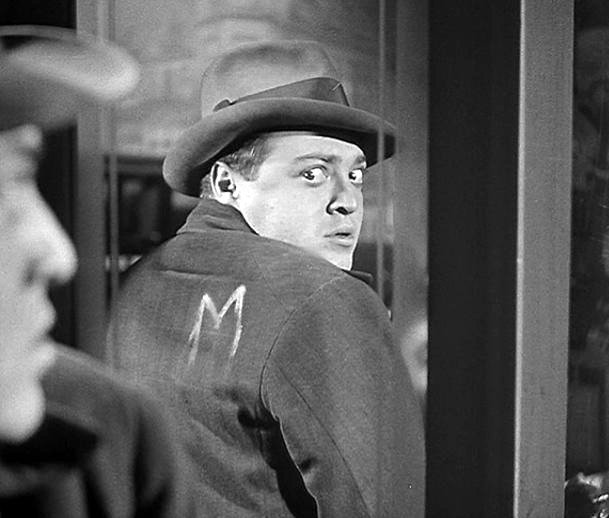
Right below Mabuse, we have another villain from a Fritz Lang movie; Hans Beckert, the first, but certainly not last villain-protagonist to appear on this list. Hans is not the most formidable villain, in fact, he's pretty pathetic. However, he makes up for this being a genuinely interesting character, one that evokes both disgust and pity at the same time. One of the best examples of a tragic monster in film.
Lope de Aguirre (Aguirre: The Wrath of God)
Klaus Kinski was an actor who was pretty much born to play villains and I had a hard time choosing between his role as the eponymous character in Aguirre and that of Tigrero/Loco in The Great Silence. As you can see, the former won out in the end. Aguirre is a terrifying character,whose thirst for gold and power causes him to slip further and further into insanity. At the end of the movie, he keeps ranting about the dynasty he's going to form (by marrying his own daughter nonethless). Unfortunately for Aguirre, the only ones who can still hear him are the monkeys.
Louis Cypher (Angel Heart)
The Devil as played by Robert De Niro. Never has the simple act of eating a boiled egg come across as more sinister.
Antonio Salieri (Amadeus)
By all accounts, the real-life Salieri was not that bad a guy, he thought several young singers and compositors (one of his more famous pupils was Ludwig van Beethoven) and all but his wealthiest students received their education for free. The Salieri seen in Amadeus on the other hand, is a petty and murderous schemer, motivated chiefly by envy. However, what makes Salieri such a great villain is his complexity; while he despises Mozart, he clearly recognizes the latter's brilliance and acknowledges his genius. Which of course only furthers Salieri's resentment and underlying self-loathing, knowing that he's doomed to forever live in the shadow of his younger, more talented rival. Odd as it may seem, there were times in watching the movie when I felt for the guy.
Colonel Hans Landa (Inglorious Basterds)
Quentin Tarantino's filmography contains its fair share of memorable villains. My personal favorite is Hans Landa, the Nazi-villain of Inglorious Basterds. Easily the best character in the movie, Landa is quirky and affable, while also being ruthlessly effective at carrying out his task of hunting down escaped Jews. What's interesting about Landa is that he doesn't care about the Third Reich or Hitler, having no problem in selling them out when opportunity presents itself. This begs the question: What's more horrible? To fully believe in a system or ideology that commits numerous atrocities, including genocide, or to use said system to sate your own greed and opportunism?
Harry Powell (The Night of the Hunter)
Or "Preacher Harry Powell" as he insists upon calling himself (wonder if that's where the makers of Pirates of the Caribbean got the idea of Jack referring to himself as "Captain Jack Sparrow" from?). The handsome (Robert Mitchum, natch) but incredibly sinister Powell hunts his two step-children (after disposing of their mother) in the hopes of getting the money that the kids' biological father, Harry's cellmate, hid inside his daughter's doll. The Night of the Hunter is a movie that at times has a strange, dreamlike quality to it. However, this self-proclaimed preacher doesn't waste time turning the dream into a nightmare.
Michael Corleone (The Godfather Trilogy)
What's there to say about Michael Corleone? When we first meet him, he's the white sheep of the Corleone family; a war-hero who wants nothing to do with the family business. Unfortunately for Michael, events conspires against him and he's eventually forced to become the next Don, gradually transforming into a ruthless villain. Has there ever been a better portrayal of a man's fall from grace in cinema?
Ryonosuke Tsukue (Sword of Doom)
Out of the evil leads on this list, Ryonosuke is arguably the most evil (though Aguirre comes close). A master-swordsman, Ryonosuke travels the Japanese countryside, using his talents with the blade to indulge in various villainous deeds, mostly for his own amusement. Cruel, violent and ultimately self-destructive, this is one man for whom the term Bushido, simply doesn't exist.
So, there you have it: These were some of my favorite movie-villains. I hope that I succeeded in making you interested in checking out some of the movies these horrible, yet fascinating men and women appear in. Below are a list of honorable mentions; villains that I like, but I didn't write about in detail, because I felt the list was long enough already:
Roy Batty (Blade Runner) - Only not on the list because I'm not sure if he's a villain, as opposed to being "merely" an antagonist.
Daniel Plainview (There Will Be Blood)
Anton Chigurh (No Country For Old Men)
Capitan Vidal (Pan's Labyrinth)
Archibald Cunningham (Rob Roy)
Noah Cross (Chinatown)
Pretty much everyone except Alais (The Lion in Winter)
Claudandus (Felidae)
Dudley Smith (L.A. Confidential) - Better in the books, but still a good villain.
Col. Kurtz (Apocalypse Now)
Oh, and the following Disney-villains: Maleficent (Sleeping Beauty), Prof. Ratigan (The Great Mouse Detective) and Judge Claude Frollo (The Hunchback of Notre Dame)
And many more.
Search This Blog
Monday, September 14, 2015
Thursday, August 27, 2015
Things I'm Looking Forward To
There's a saying that goes "the person who waits for something good, never waits too long". Still, there are times when it seems like you've waited forever for the next installment of your favorite series/franchise. With that in mind, this post will focus on a few works of fiction that I'm eager to get my hands on. Here goes:
The Winds of Winter by George R.R. Martin
I may have made the decision not to watch anymore of Game of Thrones, due to not appreciating the direction the show has taken, but I still remain a fan of the original books and am looking forward to the next installment in George R.R. Martin's epic fantasy saga. I want to see Sansa come into her own as master-manipulator under the tutelage of Littlefinger. I want to see what Tyrion's been up to and most of all, I want to see Stannis defeat Ramsay, completely and utterly. Whether or not any of these wishes will come true, I do not know, but I'm confident that whatever Martin chooses to do with his story and characters, it can't be worse than what Benioff & Weiss have done with them.
Duncan the Wonder-Dog Show Two by Adam Hines
I discovered Duncan the Wonder-Dog thanks to the excellent comic-review site Good OK Bad and since its definitely the most obscure out of the works mentioned here and I've never mentioned it on this blog before, a brief introduction might be in order. Duncan the Wonder-Dog is a comic which revolves around the simple concept: What if humans and animals could communicate? From this idea, Adam Hines has crafted a vast and ambitious tale. The first volume in the series, titled Show One, originally came out in 2010 and took Hines seven years to complete. No idea whether Show Two will take as long, but I have little doubt it will be worth it.
Note: Read the entirety of Show One for free, here.
Fargo Season 2
I was skeptical to the Fargo TV-Show going in, but the first season more than exceeded my expectations, being a truly excellent piece of television that captured the spirit of the original Cohen Brothers' movie, while also being its own thing. Plus, it featured some great performances from Billy Bob Thornton, Allison Tolman and Martin Freeman. Season two is apparently going to take place in the 70's and focus on Lou Solverson, the father of Molly, the heroine of the first season. I liked Lou's appearances as a supporting character in season 1, so I'm looking forward to see how he does in the role of protagonist. The thing that has me the most excited about the second season, however, is that Nick Offerman is going to be in it. I only know him from comedic shows like Parks and Recreations, so it will be interesting to see how he does in a more dramatic series.
The Mirror and the Light by Hilary Mantel
The final volume in Hilary Mantel's trilogy centered around Thomas Cromwell. The previous installments in the series; Wolf Hall and Bring Up the Bodies are among my favorite novels and the recent BBC mini-series was brilliant as well. Out of all the works listed here, this is the one I'm personally looking forward to the most.
Berlin: City of Light by Jason Lutes
The final installment in Lutes' trilogy about Berlin during the years of Weimar Republic, its downfall and the rise of the Nazis as seen through the eyes of various characters. Drawn & Quarterly have actually published the first three issues of this volume (though issue 17 the one that kicks it off is apparently out of stock), but I'd rather wait until I can read the whole thing in one sitting.
The Winds of Winter by George R.R. Martin
I may have made the decision not to watch anymore of Game of Thrones, due to not appreciating the direction the show has taken, but I still remain a fan of the original books and am looking forward to the next installment in George R.R. Martin's epic fantasy saga. I want to see Sansa come into her own as master-manipulator under the tutelage of Littlefinger. I want to see what Tyrion's been up to and most of all, I want to see Stannis defeat Ramsay, completely and utterly. Whether or not any of these wishes will come true, I do not know, but I'm confident that whatever Martin chooses to do with his story and characters, it can't be worse than what Benioff & Weiss have done with them.
Duncan the Wonder-Dog Show Two by Adam Hines
I discovered Duncan the Wonder-Dog thanks to the excellent comic-review site Good OK Bad and since its definitely the most obscure out of the works mentioned here and I've never mentioned it on this blog before, a brief introduction might be in order. Duncan the Wonder-Dog is a comic which revolves around the simple concept: What if humans and animals could communicate? From this idea, Adam Hines has crafted a vast and ambitious tale. The first volume in the series, titled Show One, originally came out in 2010 and took Hines seven years to complete. No idea whether Show Two will take as long, but I have little doubt it will be worth it.
Note: Read the entirety of Show One for free, here.
Fargo Season 2
I was skeptical to the Fargo TV-Show going in, but the first season more than exceeded my expectations, being a truly excellent piece of television that captured the spirit of the original Cohen Brothers' movie, while also being its own thing. Plus, it featured some great performances from Billy Bob Thornton, Allison Tolman and Martin Freeman. Season two is apparently going to take place in the 70's and focus on Lou Solverson, the father of Molly, the heroine of the first season. I liked Lou's appearances as a supporting character in season 1, so I'm looking forward to see how he does in the role of protagonist. The thing that has me the most excited about the second season, however, is that Nick Offerman is going to be in it. I only know him from comedic shows like Parks and Recreations, so it will be interesting to see how he does in a more dramatic series.
The Mirror and the Light by Hilary Mantel
The final volume in Hilary Mantel's trilogy centered around Thomas Cromwell. The previous installments in the series; Wolf Hall and Bring Up the Bodies are among my favorite novels and the recent BBC mini-series was brilliant as well. Out of all the works listed here, this is the one I'm personally looking forward to the most.
Berlin: City of Light by Jason Lutes
The final installment in Lutes' trilogy about Berlin during the years of Weimar Republic, its downfall and the rise of the Nazis as seen through the eyes of various characters. Drawn & Quarterly have actually published the first three issues of this volume (though issue 17 the one that kicks it off is apparently out of stock), but I'd rather wait until I can read the whole thing in one sitting.
Thursday, August 20, 2015
District 14, Season 2
When I reviewed the first season of District 14 back in February, I heaped a lot of praise upon it. I loved the world that writer Pierre Gabus and artist Romuald Reutimann had created and the rich cast of characters they populated it with. As such, I was of course eager to read the second season of the comic, to see if it would live up to the standards set by its predecessor.
For those of you who haven't read my review of season 1, a brief introduction might be necessary: District 14 (original title: Cité 14) is a French comic which takes place in the eponymous district; a place populated by regular humans, anthropomorphic animals, aliens and even a superhero. The first season introduced us to this setting through the eyes of newly arrived immigrant, Michael Elizondo, a pachyderm who had left his homeland, due to circumstances which were revealed at the end of the season. Upon his arrival in District 14, Michael almost immediately ended up saving the life of journalistic beaver, Hector McKeagh, leading to the two striking a partnership, working as investigative reporters for one of the district's newspapers.
Season 2 begins where its predecessor ended; Michael's sickness has deformed him and causing him to grow increasingly violent. He has fallen into the thrall of a father-son team of monkeys, who knows about his past and forces him to steal for them in order to receive the leaves that can be used to slow down the progress of the sickness. At the same time, Hector, sets out to make peace with his past; first by investigating the rumors of contaminated water in the Covington Neighborhood, the part of the district where most of its alien inhabitants live, and second of all to spring Cloxm, one of the aliens' political leaders and the person Hector's dead wife, Belinda, left him for, out of prison.
As was the case with the first season, season 2 of District 14 sees Gabus juggling several plot-lines of varying importance and it it's a testament to his skill as a storyteller that he constantly kept me invested in what would happen next, no matter whether the focus was on Michael, Hector or any other character.
Speaking of characters, all the ones introduced in season 1 are back for this round (except for those who died during the course of that season's events) and several of the old characters, who only had walk-on roles in the first season, get fleshed out in this one. New characters are also introduced, among the more interesting are Bill and Joe, a couple of old-timers, who set out to avenge the death of an old friend (said friend was mentioned briefly in the first season) at the hands of the most powerful man in the city. Another memorable new introduction is the affably evil, bunny hit-man, Walter Lipoda.
As for Reutimann's artwork, I can't think of much to write about it. It continues to be very appealing to look at, and suits the overall tone of the comic very well, in my opinion.
Do I have anything negative to say about District 14's second season? Well, maybe there's the fact that at it ends with several plot-threads still left hanging. That said, I enjoyed my second visit to the District immensely and am looking forward to the upcoming third season.
Sunday, August 9, 2015
What I've Watched
Dear reader(s), it is my pleasure to bid you welcome to, what I plan to turn into a new feature on this blog. Under the header What I've Watched, I'm going to talk about the shows I've been watching lately; old and new, live-action and animated and my impressions of them. I don't have much more to say, so let's cut to the chase:
True Detective (season 2)
The first season of True Detective was some truly excellent television, featuring great directing and cinematography courtesy of Cary Joji Fukunaga and outstanding performances from Woody Harrelson and Matthew McConaughey. Naturally, I was greatly looking forward to the second season. Well, season 2 is here and I'm half-way through and I have to say that, so far, its not living up to the standards of its predecessor. I knew that the new season would feature a completely different plot and cast of characters and I have no problem with that. However, I must admit that I find it increasingly hard to care about the various plots and sub-plots in this season. About the only time that the show has really clicked with me was at the end of episode 2 and the beginning of episode 3. Still, I'll keep watching, hopefully the show will improve in the second half.
The opening is great though.
Sonic Boom
This show, I must say, has turned out to be a pleasant surprise. Its pretty formulaic (almost every episode I've seen boils down to Eggman hatching some scheme, usually involving robots, and Sonic and friends putting a stop to it), but it compensates for that by being genuinely funny. Its not Steven Universe or anything, but its an amusing series that I don't mind watching every now and then.
Garo the Animation
Another show I'm enjoying. Garo the Animation may not break new ground among fantasy anime or take the genre to new heights (at least not from what I've seen), but so far, its a solid show that does what it does very well. The cast may not count among the most memorable the medium has offered us, but the characters are engaging and I'm interested to see what's going to happen next.
Yuri Kuma Arashi
Not sure what to think of this one yet. It has all the weirdness, visual richness and symbolism that I've come to expect from Ikuhara's work, but it hasn't really grabbed me the way that Utena or Penguin Drum did. So far, my favorite episode was the one focused on Lulu and her past. I must admit, I got a chuckle out of her repeated efforts to kill her little brother. On another note, the absence of a lengthy musical interlude, like the above-mentioned shows had, is somewhat disappointing.
Ripper Street (season 1)
I've saved the best for last. Ripper Street is a crime-series set in London, shortly after the Whitechapel Murders and its absolutely brilliant. The three main-characters are well-drawn and expertly portrayed by their actors (including Jerome Flynn, who you may recognize as Bronn from Game of Thrones) and they are backed-up by a strong supporting cast. The show also does a great job of depicting Victorian London and many of the cases, involves the social, political and economical conflicts of the time-period. This is one show that I recommend without any hesitation and I'm really looking forward to watching season 2.
Well, that's it, for now. If you have any suggestions or recommendations for me, please, feel free to post them in the comments.
True Detective (season 2)
The first season of True Detective was some truly excellent television, featuring great directing and cinematography courtesy of Cary Joji Fukunaga and outstanding performances from Woody Harrelson and Matthew McConaughey. Naturally, I was greatly looking forward to the second season. Well, season 2 is here and I'm half-way through and I have to say that, so far, its not living up to the standards of its predecessor. I knew that the new season would feature a completely different plot and cast of characters and I have no problem with that. However, I must admit that I find it increasingly hard to care about the various plots and sub-plots in this season. About the only time that the show has really clicked with me was at the end of episode 2 and the beginning of episode 3. Still, I'll keep watching, hopefully the show will improve in the second half.
The opening is great though.
Sonic Boom
This show, I must say, has turned out to be a pleasant surprise. Its pretty formulaic (almost every episode I've seen boils down to Eggman hatching some scheme, usually involving robots, and Sonic and friends putting a stop to it), but it compensates for that by being genuinely funny. Its not Steven Universe or anything, but its an amusing series that I don't mind watching every now and then.
Garo the Animation
Another show I'm enjoying. Garo the Animation may not break new ground among fantasy anime or take the genre to new heights (at least not from what I've seen), but so far, its a solid show that does what it does very well. The cast may not count among the most memorable the medium has offered us, but the characters are engaging and I'm interested to see what's going to happen next.
Yuri Kuma Arashi
Not sure what to think of this one yet. It has all the weirdness, visual richness and symbolism that I've come to expect from Ikuhara's work, but it hasn't really grabbed me the way that Utena or Penguin Drum did. So far, my favorite episode was the one focused on Lulu and her past. I must admit, I got a chuckle out of her repeated efforts to kill her little brother. On another note, the absence of a lengthy musical interlude, like the above-mentioned shows had, is somewhat disappointing.
Ripper Street (season 1)
I've saved the best for last. Ripper Street is a crime-series set in London, shortly after the Whitechapel Murders and its absolutely brilliant. The three main-characters are well-drawn and expertly portrayed by their actors (including Jerome Flynn, who you may recognize as Bronn from Game of Thrones) and they are backed-up by a strong supporting cast. The show also does a great job of depicting Victorian London and many of the cases, involves the social, political and economical conflicts of the time-period. This is one show that I recommend without any hesitation and I'm really looking forward to watching season 2.
Well, that's it, for now. If you have any suggestions or recommendations for me, please, feel free to post them in the comments.
Saturday, August 1, 2015
My Name is Red
One of my favorite novels is The Name of the Rose by Umberto Eco. For those of you not familiar with this novel, The Name of the Rose is a murder-mystery set in an Italian monastery in the 14th Century. The novel was also adapted into a really good movie starring Sean Connery as its mystery-solver, William of Baskerville.
Why am I mentioning this? You wonder. Because I recently read My Name is Red, by Turkish author and nobel laureate Orhan Pamuk and during my read of this novel, I was frequently reminded of Eco's masterpiece.
My Name is Red takes place in Istanbul in the year 1591. The Sultan Murad III has secretely commissioned an illuminated manuscript drawn in the new Venetian Style, a blasphemy in the eyes of many Muslims, particularly religous fundamentalists such as Hoja of Erzurum. As the novel begins, one of the miniaturists who worked on the manuscript, Elegant Effendi has been found murdered. Soon, the master of the miniaturists, Enishte Effendi is killed as well. Enishte's daughter, Shekure enlists the miniaturist known as Black to find her father's killer. If Black succeeds, Shekure will give him what he has always longed for: Her hand in marriage. However, it soon becomes clear that the murderer is one of the miniaturists himself.
From this short and limited glimpse of the plot, I'm sure that you, dear reader, can understand why I was reminded of The Name of the Rose. Both it and My Name is Red are essentially murder-mysteries set by a historical backdrop, with faith playing an important part in the proceedings. However, this doesn't mean that Pamuk has copied Eco (for all I know, Pamhuk may not even have read The Name of the Rose). The differences between the two novels far eclipse any similarities the two may share.
Take the setting for one: The Name of the Rose takes place entirely in a monastery and its surroundings. My Name is Red takes place in a bustling metropolis, the very heart of the Ottoman Empire. Another difference is the amount of narrators. Eco's novel features one narrator, the young monk Adso, who plays the Watson to William of Baskerville's Sherlock Holmes. My Name is Red features a different narrator in each chapter and what a plethora of narrators it is, dear reader. Aside from the obvious ones such as Shekure and Black, we also get to hear from the dead Elegant Effendi, his murderer and many others. Some of the narrators aren't even human; a dog, a horse, a coin and even Satan himself are among those who get to share their opinions and view-points with the reader.
My Name is Red is a work of great richness, I found it to be a fascinating read and will definitely check out more of Orhan Pamuk's work in the future.
Why am I mentioning this? You wonder. Because I recently read My Name is Red, by Turkish author and nobel laureate Orhan Pamuk and during my read of this novel, I was frequently reminded of Eco's masterpiece.
My Name is Red takes place in Istanbul in the year 1591. The Sultan Murad III has secretely commissioned an illuminated manuscript drawn in the new Venetian Style, a blasphemy in the eyes of many Muslims, particularly religous fundamentalists such as Hoja of Erzurum. As the novel begins, one of the miniaturists who worked on the manuscript, Elegant Effendi has been found murdered. Soon, the master of the miniaturists, Enishte Effendi is killed as well. Enishte's daughter, Shekure enlists the miniaturist known as Black to find her father's killer. If Black succeeds, Shekure will give him what he has always longed for: Her hand in marriage. However, it soon becomes clear that the murderer is one of the miniaturists himself.
From this short and limited glimpse of the plot, I'm sure that you, dear reader, can understand why I was reminded of The Name of the Rose. Both it and My Name is Red are essentially murder-mysteries set by a historical backdrop, with faith playing an important part in the proceedings. However, this doesn't mean that Pamuk has copied Eco (for all I know, Pamhuk may not even have read The Name of the Rose). The differences between the two novels far eclipse any similarities the two may share.
Take the setting for one: The Name of the Rose takes place entirely in a monastery and its surroundings. My Name is Red takes place in a bustling metropolis, the very heart of the Ottoman Empire. Another difference is the amount of narrators. Eco's novel features one narrator, the young monk Adso, who plays the Watson to William of Baskerville's Sherlock Holmes. My Name is Red features a different narrator in each chapter and what a plethora of narrators it is, dear reader. Aside from the obvious ones such as Shekure and Black, we also get to hear from the dead Elegant Effendi, his murderer and many others. Some of the narrators aren't even human; a dog, a horse, a coin and even Satan himself are among those who get to share their opinions and view-points with the reader.
My Name is Red is a work of great richness, I found it to be a fascinating read and will definitely check out more of Orhan Pamuk's work in the future.
Thursday, July 2, 2015
The Desert Peach
The Desert Peach by Donna Barr tells the story of a small unit of the Afrika Korps, headed by Manfred Pfirsich Marie Rommel, the fictional younger brother of the famous Desert Fox. However, there's not much of a resemblance between The Desert Peach and his brother; for one, Pfirsich is homosexual and his unit mostly serves a haven for various misfits that don't really fit into the new Germany but nonetheless were called upon to do military service. Among the more prominent and colorful members of this unit are Pfirsisch's fiance, Rosen Kavalier (real name Melvin Gonville Ramsbottom); a scoundrel completely lacking a heart of gold, but who remains strangely likable. Kjars Winzig, the unit's self-appointed political commissioner, bristling with patriotic fervor and dedication to Das Vaterland, and finally, Pfirsich's orderly, Udo Schmidt. Udo is the only member of the unit who is a card-carrying member of the Nazi-Party (since even hardcore Hitler-fanboy Winzig was to cheap to pay the membership-fee). He's also secretly Jewish, his real name being Isador Gülphstein.
From the above description it may seem as if The Desert Peach is pure farce. However, nothing could be farther from the truth. Sure, there's plenty of comedy to be had, but also lots of drama as well. Barr never allow the reader to forget that her comic takes place during one of the darkest times in the history of mankind; the horrors of the war and the evils of the Holocaust are never far away. Barr frequently uses the comic to tackle heavy and difficult subjects, such as rape and child-murder and she does this very well.
Barr's greatest strength are her characters, all of the ones I mentioned above reveal themselves to be complex and fleshed-out people, capable of both good and bad. Pfirsich himself is one of my favorite protagonists in any comic, while at first he may seem like a complete air-head, it soon becomes clear that he's a brave, honorable and intelligent guy, who cares deeply for the men under his command.
Another thing I like about the comic is its time-span, it would have been easy for Barr to have the entire comic take place in North Africa during World War 2, but instead she chooses to move forward in time: We get to see learn the fate of characters like Udo and Winzig after the war and we see Pfirsich and Rosen as old men, still living together.
On the artistic side, Barr's artwork goes through some changes during the course of the comic (as one would perhaps expect): In the early issues, she draws in a very clean and realistic style, but as the comic goes on, her art become stylized and dense, sometimes resembling woodcuts. Which one's better is, of course, a matter of taste, personally I prefer the later style and part of that is because I get the feeling (though this is pure speculation on my part) that Donna was more comfortable with it.
With its flawed, deeply human characters, excellent blend of comedy and drama and engaging plots, The Desert Peach is a comic that I heartily recommend. Not just to those with an interest in World War 2, but to anyone with an interest in great comics.
From the above description it may seem as if The Desert Peach is pure farce. However, nothing could be farther from the truth. Sure, there's plenty of comedy to be had, but also lots of drama as well. Barr never allow the reader to forget that her comic takes place during one of the darkest times in the history of mankind; the horrors of the war and the evils of the Holocaust are never far away. Barr frequently uses the comic to tackle heavy and difficult subjects, such as rape and child-murder and she does this very well.
Barr's greatest strength are her characters, all of the ones I mentioned above reveal themselves to be complex and fleshed-out people, capable of both good and bad. Pfirsich himself is one of my favorite protagonists in any comic, while at first he may seem like a complete air-head, it soon becomes clear that he's a brave, honorable and intelligent guy, who cares deeply for the men under his command.
Another thing I like about the comic is its time-span, it would have been easy for Barr to have the entire comic take place in North Africa during World War 2, but instead she chooses to move forward in time: We get to see learn the fate of characters like Udo and Winzig after the war and we see Pfirsich and Rosen as old men, still living together.
On the artistic side, Barr's artwork goes through some changes during the course of the comic (as one would perhaps expect): In the early issues, she draws in a very clean and realistic style, but as the comic goes on, her art become stylized and dense, sometimes resembling woodcuts. Which one's better is, of course, a matter of taste, personally I prefer the later style and part of that is because I get the feeling (though this is pure speculation on my part) that Donna was more comfortable with it.
With its flawed, deeply human characters, excellent blend of comedy and drama and engaging plots, The Desert Peach is a comic that I heartily recommend. Not just to those with an interest in World War 2, but to anyone with an interest in great comics.
Saturday, June 27, 2015
Simoun
Simoun is a 2006 anime made by Studio Deen and directed by Junji Nishimura. It takes place on the planet Daikariu, a world in which everyone is biologically born female. When they reach the age of seventeen, the denizens of this world embark on a pilgrimage to a holy spring, where they are given the opportunity to either stay female or become male. One of the nations of this world, the theocracy Simulacrum, has grown to prosperity thanks to its monopoly on the advanced helical technology. As a consequence of this, Simulacrum is under attack by the allied forces of the nations Argentum and Plumbum, both of which wants to steal this technology for their own uses. Simulacrum is defended by priestesses known as Sibyllae, who flies into battle in advanced airships called Simoun. The anime follows one fleet of Simoun; Chor Tempest, as its members deal with the war as well as their relationship with each other.
Simoun's biggest asset is without a doubt its cast of characters. The members of Chor Tempest all have distinct personalities, their quirks and foibles are portrayed well and they are, all in all, easy to get attached to. I think my favorite character was Mamiina, she starts out as a pretty dislikable character, but even then I thought she was interesting. Her resentment towards Rodoraemon and her willingness to do whatever it took to get ahead while not justified, are at least somewhat understandable once her backstory comes to light. Point is, Mamiina is not a jerk just for the sake of being a jerk and as the show progresses, Mamiina's more positive traits becomes more and more apparent and she ends up being what is probably Simoun's most empathetic character. That said, I could easily have picked Neviril, or Rodoraemon or Paraietta as my favorite. As I said, the characterization on this show is very good.
On the visual side of things, Simoun may not be as exciting as some other anime I've seen, but I still thought the visuals were good: I found the aerial-sequences to be thrilling and the character-designs appealing. As for the soundtrack, its of a consistently high quality, with the music reflecting the mood of what's happening very well.
If I have any criticisms against Simoun, I guess it would be that the actual plot evolving the war is not quite as interesting as the characters or the setting of the show. Don't get me wrong, the plot isn't bad or anything, but its not exactly amazing either.
Some of the characters who are identified as male are clearly voiced by women. I think I understand the reason for this, but it was still pretty distracting at first.
A word of warning: There's a lot of kissing going on in Simoun. So, if you have a problem with that, I wouldn't recommend watching the show.
To the rest of you, though, Simoun comes warmly recommended. If I ever do an expanded version of my Top Animated Shows list, it'd definitely be on it somewhere.
Simoun's biggest asset is without a doubt its cast of characters. The members of Chor Tempest all have distinct personalities, their quirks and foibles are portrayed well and they are, all in all, easy to get attached to. I think my favorite character was Mamiina, she starts out as a pretty dislikable character, but even then I thought she was interesting. Her resentment towards Rodoraemon and her willingness to do whatever it took to get ahead while not justified, are at least somewhat understandable once her backstory comes to light. Point is, Mamiina is not a jerk just for the sake of being a jerk and as the show progresses, Mamiina's more positive traits becomes more and more apparent and she ends up being what is probably Simoun's most empathetic character. That said, I could easily have picked Neviril, or Rodoraemon or Paraietta as my favorite. As I said, the characterization on this show is very good.
On the visual side of things, Simoun may not be as exciting as some other anime I've seen, but I still thought the visuals were good: I found the aerial-sequences to be thrilling and the character-designs appealing. As for the soundtrack, its of a consistently high quality, with the music reflecting the mood of what's happening very well.
If I have any criticisms against Simoun, I guess it would be that the actual plot evolving the war is not quite as interesting as the characters or the setting of the show. Don't get me wrong, the plot isn't bad or anything, but its not exactly amazing either.
Some of the characters who are identified as male are clearly voiced by women. I think I understand the reason for this, but it was still pretty distracting at first.
A word of warning: There's a lot of kissing going on in Simoun. So, if you have a problem with that, I wouldn't recommend watching the show.
To the rest of you, though, Simoun comes warmly recommended. If I ever do an expanded version of my Top Animated Shows list, it'd definitely be on it somewhere.
Subscribe to:
Posts (Atom)


